
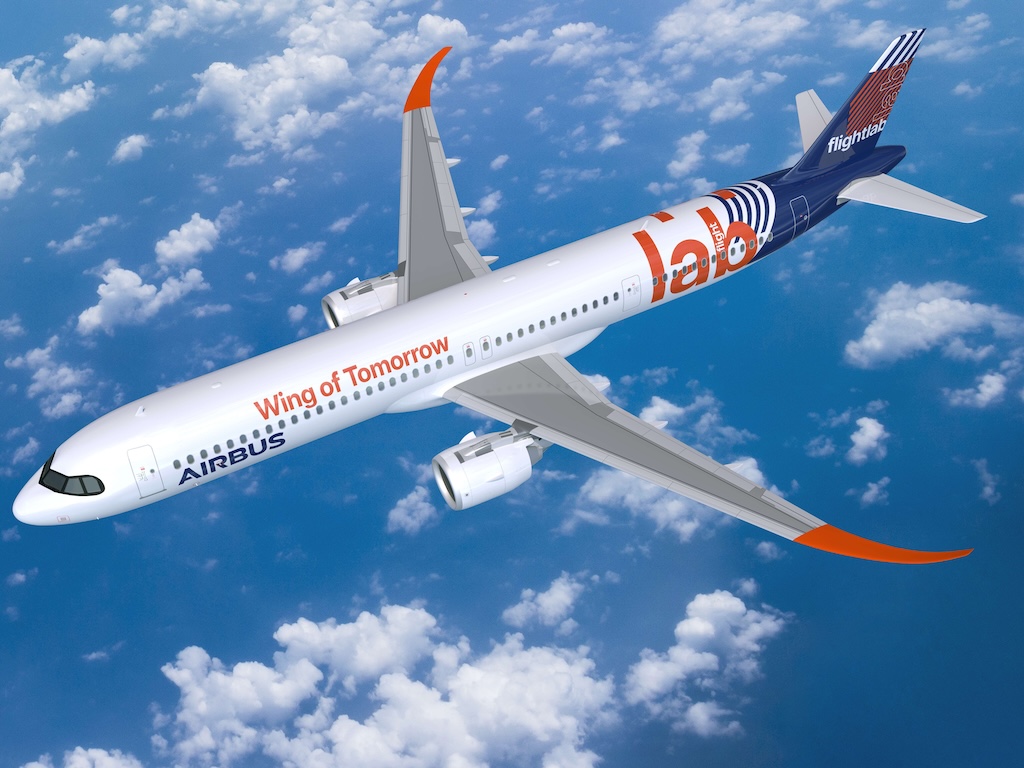
European planemaker Airbus is embarking on a major new flight-test campaign aimed at evaluating high-span wings for its upcoming generation of single-aisle aircraft. The ambitious initiative marks the next critical phase of the company’s Wing of Tomorrow program, one of its largest research and technology research undertakings to date. Over the coming three years, Airbus engineers will design, construct, and flight-test full-scale wing extensions installed on an A321neo test aircraft to assess how altered wing geometries behave under actual flight conditions.
Each extension will span several meters and simulate a folding wing structure in its fully extended position while airborne. These extensions will feature comprehensive onboard testing instruments engineered to log real-time structural behavior and determine how an expanded wingspan influences overall aircraft handling dynamics. The underlying goal of the Wing of Tomorrow initiative is to produce longer, lighter, and more slender wings that optimize aerodynamic efficiency while significantly lowering fuel consumption across commercial operations.
According to Sue Partridge, Airbus Head of the Wing of Tomorrow program, the wing represents one of the most effective mechanical levers available to enhance flight efficiency. She emphasized that the upcoming flight campaign provides an ideal platform to safely challenge legacy design constraints and unlock the advantages of longer wingspans for future narrowbody jets. Airbus is currently utilizing advanced digital modeling together with wind tunnel testing to refine the extension designs prior to full flight evaluation. Collecting empirical flight data remains essential to de-risk these novel concepts and validate their real-world performance benefits.
Assembly of the wing extensions will take place at the Airbus Wing Technology Development Centre located in Filton, United Kingdom, with flight testing scheduled to be conducted over Toulouse, France. To date, Airbus has already constructed three 17-meter ground-based wing demonstrators to analyze the structural advantages of increased wingspan alongside more than 100 new manufacturing and assembly techniques. Since its inception in 2014, the Wing of Tomorrow program has received 227 million pounds in backing from the Aerospace Technology Institute program, a collaborative partnership involving the ATI, the UK Department for Business and Trade, and Innovate UK aimed at keeping the region at the forefront of aerospace innovation.