
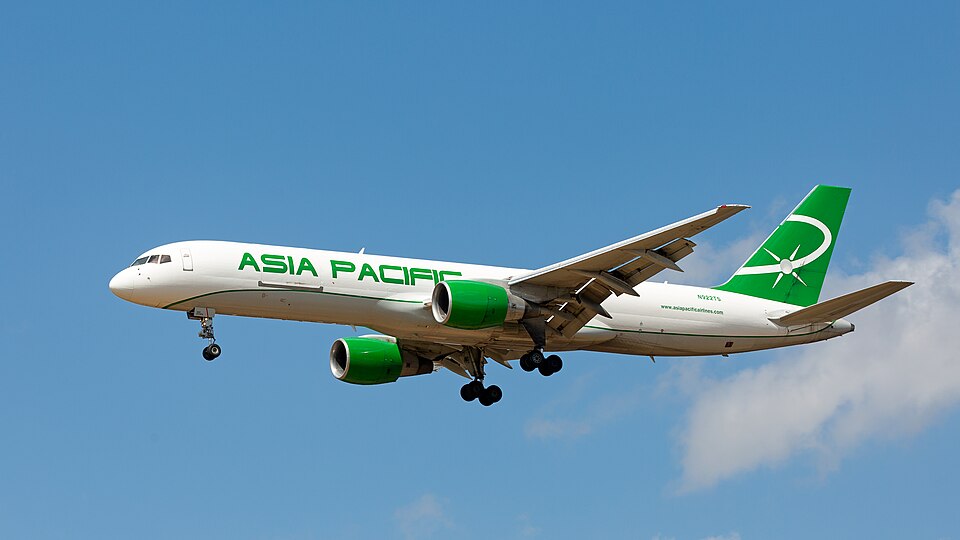
The U.S. Department of Transportation (DOT) approved Guam-based Asia Pacific Airlines’ (APA) application in May 2026 to operate scheduled all-cargo and mail services between Guam (GUM), Hong Kong (HKG), and Manila (MNL) for an initial period of two years, paving the way for expanded U.S.-flag cargo operations across the Asia-Pacific region.
The approval allows the airline to operate under Route 3 of the 1995 U.S.-Philippines Air Transport Agreement, which governs commercial air services between the United States and the Philippines. Route 3 specifically authorizes scheduled all-cargo operations between the two countries.
Under the exemption authority granted by the DOT (USA), Asia Pacific Airlines will operate seven weekly roundtrip cargo flights linking Guam, Hong Kong, and Manila. The airline said the service will strengthen cargo connectivity across the Western Pacific while providing additional options for freight forwarders, exporters, importers, and defense-related logistics operating in the region.
APA originally filed its application on 09 March 2026, seeking both a certificate of public convenience and necessity and an exemption authority that would allow it to begin operating before the permanent certificate takes effect. The airline argued that the proposed route would deliver significant economic and logistical benefits by introducing another U.S.-flag cargo carrier into the market.
In its application, APA said the service would “provide new competitive U.S.-flag all cargo service in the Guam-Hong Kong-Manila market, and connect APA’s established Pacific network with the Philippines and the broader Asian supply chain.” The carrier also said the route would support U.S.-based shippers, freight forwarders, and defense logistics on Guam and throughout the Western Pacific while enhancing cargo operations serving the island.
The DOT’s approval came as air cargo demand across the Asia-Pacific region continued to show resilience despite global economic uncertainties.
According to the Association of Asia Pacific Airlines (AAPA), international air freight traffic in the region increased by 2.5% in March 2026 compared with the same month a year earlier. The organization, however, noted that the industry continued to face challenges from constrained supply chains and rising fuel costs resulting from the conflict involving Iran. AAPA Director General Wong Hong also said the geopolitical tensions had forced some cargo flight cancellations.
Asia Pacific Airlines told regulators that it does not anticipate any operational difficulties in launching the new service.
The airline said it had already held preliminary discussions with Manila’s Ninoy Aquino International Airport (NAIA) regarding arrival and departure schedules and believes it can successfully integrate the new flights into the airport’s operations.
APA currently operates a fleet of four Boeing B757-200 freighter aircraft based primarily in Guam (GUM) and Honolulu (HNL). The airline has previously conducted charter cargo operations between the Philippines and other destinations in Asia, giving it experience in the regional cargo market.
The carrier added that the Manila route would utilize its existing aircraft and flight crews, meaning start-up costs would remain relatively modest and would primarily involve securing foreign approvals, local operating arrangements, and other administrative requirements. It also expects no personnel-related issues in supporting operations in Manila.
In its submission to the DOT, APA also argued that the Route 3 authority had remained dormant for years. The airline noted that the previous holder of the authority, Polar Air Cargo, had not operated scheduled cargo services to the Philippines since at least 2020.
Under DOT regulations, limited-entry international route authorities are subject to a 90-day dormancy rule. Airlines that suspend service for more than 90 days after beginning operations risk losing their operating rights. APA maintained that Polar’s prolonged inactivity exceeded the dormancy threshold.
Although the DOT approved APA’s exemption authority in May 2026, allowing the airline to operate the route for two years, the department deferred action on the carrier’s application for a certificate of public convenience and necessity, which would grant permanent authority to operate the service.
The DOT said APA’s request for certificate authority would be considered separately, leaving open the possibility that the Guam-Hong Kong-Manila cargo service could eventually become a permanent addition to the region’s expanding air freight network.