
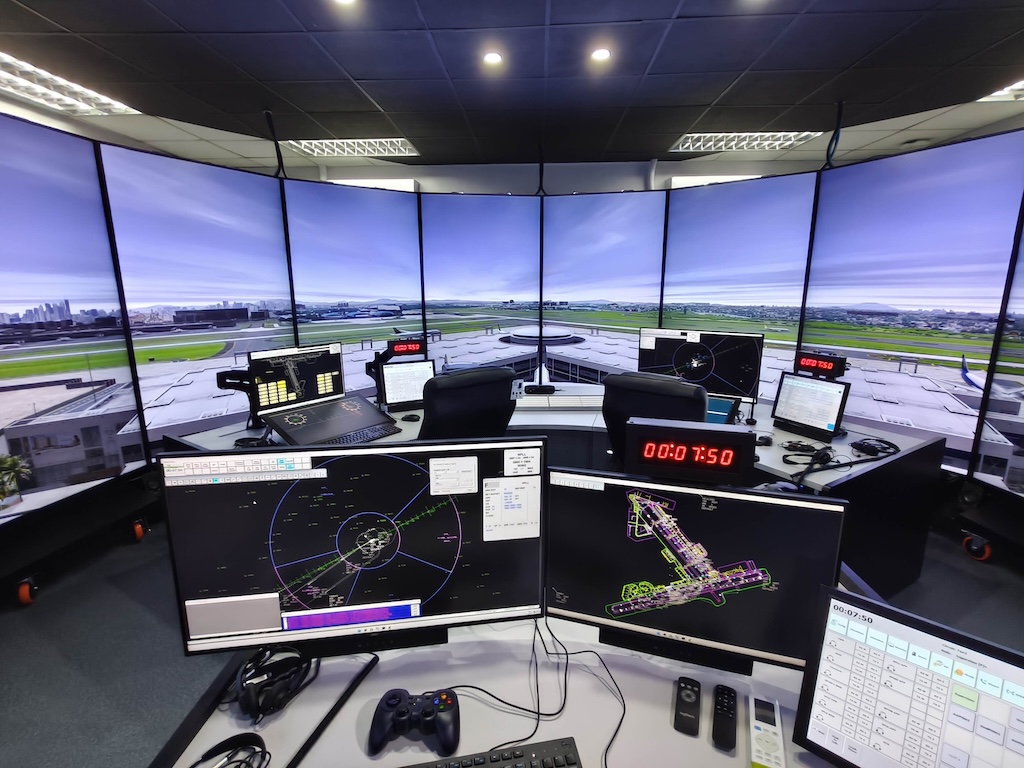
The Philippine aviation landscape takes a major leap forward as the Civil Aviation Authority of the Philippines (CAAP) introduces three state-of-the-art air traffic control simulators at its main training facility. The PHP253-million upgrade features advanced 360-degree Aerodrome, Approach, and Enroute simulators designed to replicate realistic flight phases and actual operational environments. This infrastructure push directly aligns with the government’s aim of modernizing national aviation assets, update technical systems, and prioritize passenger safety across the archipelago. Transportation Secretary Banoy Lopez highlighted that updating internal systems and upskilling personnel is just as vital as improving physical infrastructure like runways and passenger terminals, ensuring a safer and far more resilient sector for all stakeholders.
The arrival of these top-of-the-line systems marks a transformative era for the Air Traffic Service and the broader aviation community. Designed to meet International Civil Aviation Organization Standards and Recommended Practices, particularly regarding Competency-Based Training and Assessment, the high-tech installation allows trainees to master complex operational scenarios in a safe, controlled setting. The immersive setup sharply reduces the reliance on live air traffic for hands-on instruction, enabling a seamless and structured transition from basic classroom theory to active control tower operations. Key air traffic controller competencies, including rapid decision-making, situational awareness, clear communication, and complex traffic management, will be significantly sharpened through scenario-based exercises.
Beyond enhancing technical capabilities, the modernization directly addresses critical human resource challenges currently facing local aviation. CAAP Director General Raul Del Rosario emphasized that these world-class simulators will streamline the flagship training initiative, shortening the rigorous program duration from 09 months down to 06 months. This accelerated timeline is poised to bolster air traffic controller staffing, alleviate chronic fatigue among personnel at busy regional airports, and counter the continuous exodus of skilled controllers seeking lucrative opportunities abroad. By expanding the output of qualified professionals, the authority aims to build a robust, sustainable pipeline of talent capable of handling growing flight volumes.
Aspiring aviation professionals stand to gain immense benefits from the upgraded training ecosystem. Through the ongoing recruitment drive, eligible candidates who complete a four-year degree and pass the comprehensive written and aptitude examinations receive fully funded, specialized training without paying tuition fees. Successful graduates are assured immediate employment as Air Traffic Management Officers deployed across various airports nationwide. With state-of-the-art tools now operational, the Philippines reinforces its commitment to maintaining international safety benchmarks while positioning its local air traffic control network at the forefront of regional aviation standard excellence.