
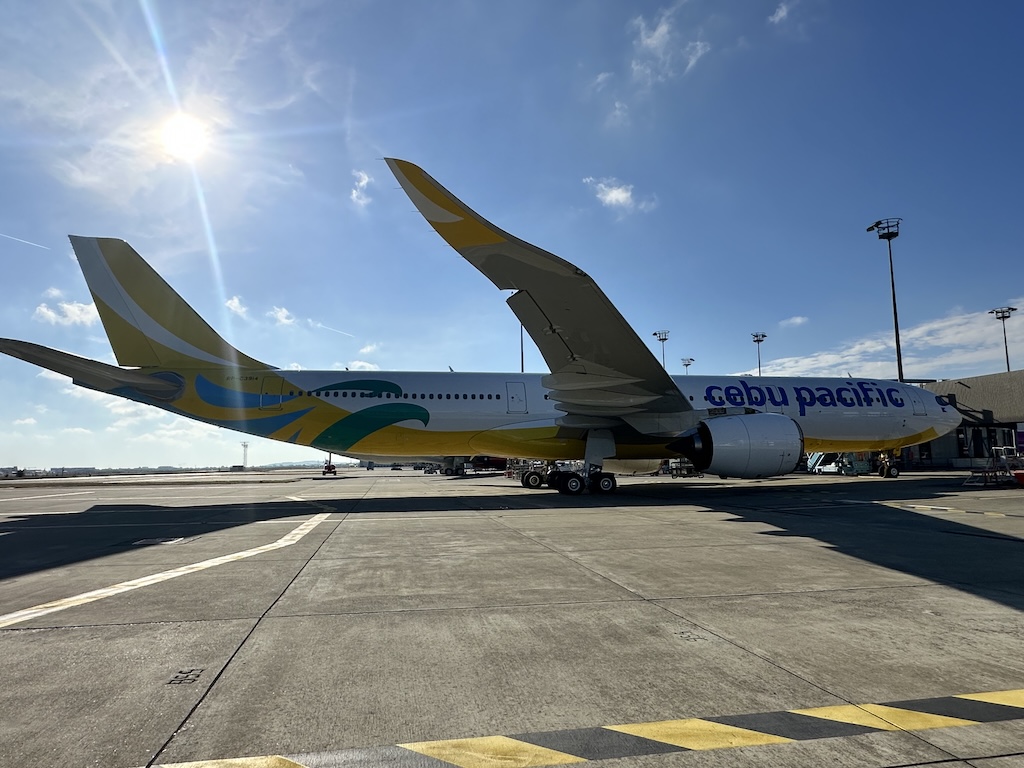
Cebu Pacific (CEB | 5J), the leading airline in the Philippines, has formally expanded its operational fleet following the successful arrival and delivery of its 15th Airbus A330neo aircraft (RP-C3914). This latest addition marks another major operational milestone for the budget carrier, further reinforcing its status as the single largest operator of Airbus A330neo aircraft across Asia. By continually introducing these modern, high-efficiency widebody aircraft into active service, the carrier continues to modernize its broader commercial network while maintaining an increasingly competitive edge throughout the regional aviation landscape.
The newly delivered widebody jet officially completed its transcontinental ferry flight from Airbus’ primary manufacturing facility located in Toulouse (TLS), France, arriving directly in Manila earlier today . Within the context of the airline’s broader fleet strategy for the year, this specific arrival represents Cebu Pacific’s fourth overall aircraft delivery in 2026, as well as its very first widebody aircraft induction of the year.The integration of this high-capacity jet allows the carrier to boost passenger seat density and operational capacity across high-demand flight corridors.
Speaking on the strategic value of the carrier’s latest widebody fleet expansion, Xander Lao, CEB President and Chief Commercial Officer, highlighted the long-term operational advantages provided by the modern Airbus widebody platform. “The delivery of our 15th A330neo aircraft is an important milestone for Cebu Pacific as we continue to build a more modern fleet. The A330neo offers significant fuel saving compared to previous-generation aircraft and gives us the flexibility to serve different markets across and beyond the Philippines,” said Lao.
Looking ahead at the airline’s near-term delivery schedule, CEB anticipates receiving a total of seven NEO aircraft throughout 2026. This steady influx of advanced aircraft is set to progressively increase the overall proportion of newer-generation equipment deployed across the airline’s short-haul and long-haul route networks. With this latest delivery accounted for, modern NEO aircraft now represent 78% of Cebu Pacific’s total jet fleet. This quantitative milestone moves the airline significantly closer toward its broader corporate target of operating a 100% all-NEO commercial jet fleet by the year 2030.
From an operational efficiency standpoint, the switch to modern engine options yields tangible financial and environmental benefits. Compared to previous-generation aircraft models, NEO aircraft burn 15-20% less fuel per flight and produce significantly less noise, directly contributing to reduced carbon emissions and establishing a foundation for more sustainable commercial operations.
To support its expansive route network, Cebu Pacific continues to operate one of the youngest aircraft fleets anywhere in the world. The airline currently utilizes a highly strategic and diversified fleet mix comprising 15 Airbus A330s, 27 Airbus A321s, 38 Airbus A320s, and 20 ATR turboprop aircraft. This balanced combination of regional turboprops, narrowbody jets, and heavy widebodies provides the essential operational flexibility required to maintain the widest overall network coverage and connectivity across the Philippine archipelago.