
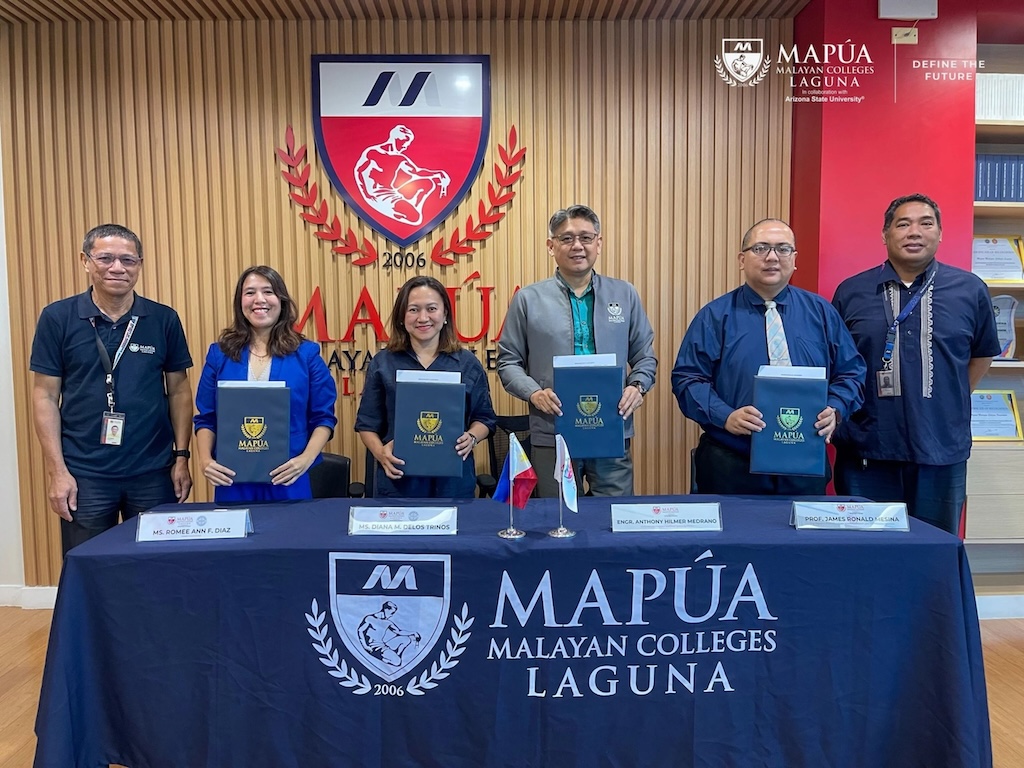
Mapúa Malayan Colleges Laguna (Mapúa MCL) has taken a decisive step toward strengthening its aviation education curriculum by forging strategic alliances with industry organizations to build a dynamic, hands-on learning environment for future aerospace professionals. In a move that bridges rigorous academic theory with real-world aerospace operations, Mapúa MCL officially entered into a Memorandum of Agreement (MOA) with Dornier Academy on 10 November 2026. This landmark signing initiates a new chapter of institutional collaboration designed to provide specialized internships and comprehensive aviation training specifically tailored for students of the Mapúa Laguna Institute of Aviation (MIA).
The formal signing ceremony brought together key institutional leaders who are actively shaping the future of aviation instruction. Representing Mapúa MCL were Engr. Anthony Hilmer S. Medrano, Executive Vice President and Chief Operating Officer, who also serves as MIA’s Accountable Manager; Prof. James Ronald O. Mesina, Vice President for External Linkages, Internationalization and Transnational Education (ELITE); Capt. Michael John P. Reyes, PhD, MIA Dean; and Engr. Ronald Cayaban, Program Chair for Aeronautical Engineering. Dornier Academy was represented by Diana Delos Trinos, President, alongside Romee Ann Diaz, Commercial Head. Their joint presence underscores the high-level commitment both institutions place on creating structured pathways from academic study directly into the aviation sector.
Through this cooperative framework, Mapúa MCL and Dornier Academy seek to create direct opportunities that seamlessly link classroom lectures with practical aviation procedures. The specialized training programs and hands-on internships will allow MIA learners to substantially deepen their technical competence, instill a high degree of professional discipline, and gain firsthand exposure to the exacting standards and daily operational expectations of modern aviation enterprises. In doing so, the immersive training builds holistic career readiness, cultivating the critical judgment, situational adaptability, and uncompromising adherence to safety protocols that remain indispensable to contemporary aviation practitioners.
Both organizations have reaffirmed their shared dedication to student success, grounded in the understanding that developing the next generation of aerospace personnel requires purposeful cooperation and mutual trust. By pooling institutional expertise and state-of-the-art training methodology, Mapúa MCL and Dornier Academy aim to prepare learners for quality education and meaningful, sustainable employment opportunities across the global aviation landscape.
In addition, this institutional partnership actively mirrors several United Nations Sustainable Development Goals. It aligns closely with SDG 4: Quality Education, placing particular emphasis on Target 4.4, which focuses on equipping youth with relevant technical and vocational skills for employment and entrepreneurship. The agreement also advances the objectives of SDG 8: Decent Work and Economic Growth by establishing strong educational foundations that prepare students for productive, high-value careers. The joint venture reflects the principles of SDG 17: Partnerships for the Goals, illustrating how academic institutions and industry leaders can successfully integrate their resources, insights, and technical capabilities to accomplish shared educational and developmental milestones.