
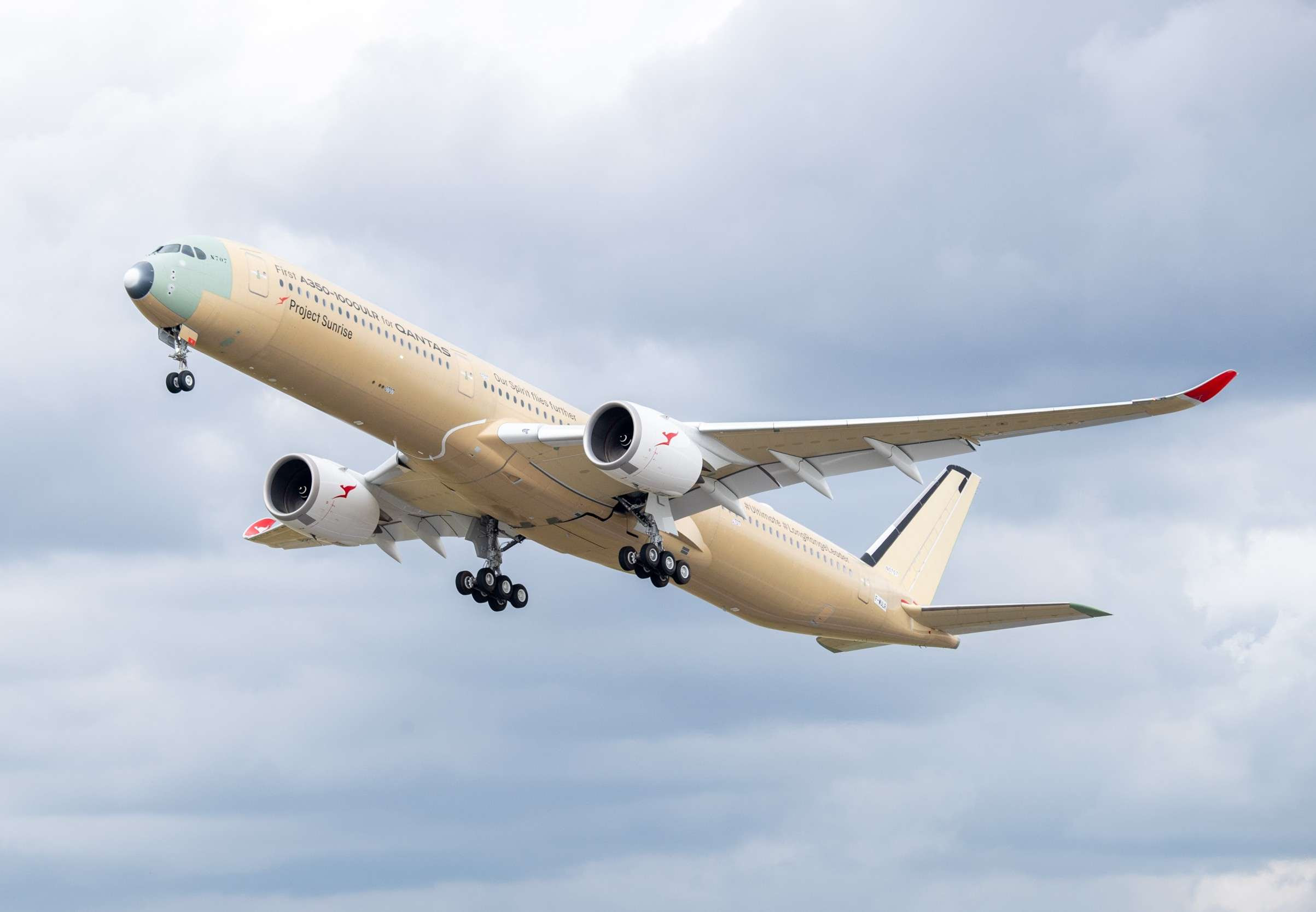
A major milestone in aviation history has been achieved as the highly anticipated Airbus A350-1000ULR successfully completed its maiden flight in Toulouse, France. Registering as Manufacturer Serial Number (MSN) 707 with temporary registration F-WULR, this specific aircraft is the very first of twelve ultra-long-range variants ordered by Australian flag carrier Qantas (QF). Specially configured with complex flight test instrumentation, the widebody twin-jet spent three hours and forty-three minutes in the skies, reaching a cruising altitude slightly above 41,000 feet. A dedicated Airbus Flight Test crew helmed the controls, closely monitoring the aircraft’s systems during this monumental first outing.
This specialized ultra-long-range variant is being custom-tailored for Qantas Airways to turn a long-held aviation dream into reality: connecting Sydney and London non-stop for the very first time. Spanning a staggering distance of nearly 10,000 nautical miles, these marathon flights are expected to push block times up to 22 hours. Engineering this unprecedented capability required Airbus to modify the existing A350-1000 structure by integrating a new rear center tank. This structural addition significantly boosts fuel capacity, ultimately expanding the aircraft’s standard operational range by an impressive 1,000 nautical miles.
During the inaugural flight, the test crew focused heavily on executing general aircraft performance evaluations and rigorously testing the newly designed fuel system architecture. This successful mission marks the official commencement of a rigorous two-month flight test campaign aimed at fully certifying the structural and system modifications. Beyond the fuel tanks, the campaign will validate a brand-new galley air cooling system, which utilizes lighter and significantly more efficient refrigeration units tailored specifically for ultra-long-haul operations. Technicians and engineers will also thoroughly evaluate the advanced cabin ventilation and temperature control systems to ensure maximum passenger well-being during extended flights. Once this comprehensive flight test campaign wraps up, MSN 707 will return to the hangar to be retrofitted to Qantas’ ultra-premium commercial specifications.
Meanwhile, production for the rest of the fleet is already gaining momentum. The second A350-1000ULR destined for Qantas, which is slated to be the first actual delivery to the airline in April 2027, is currently in the advanced stages of final assembly. Spotters in Toulouse can expect to see this second airframe rolling out of the paint shop in the coming days, after which teams will begin installing the luxurious four-class cabin layout and the powerful Rolls-Royce Trent XWB engines.
The introduction of the A350-1000ULR marks the arrival of the fourth passenger variant within the highly successful A350 Family, joining the existing A350-900, the shorter-fuselage A350-900ULR, and the standard baseline A350-1000. As a whole, the A350 program has revolutionized the modern long-haul landscape by delivering a step-change reduction in fuel consumption and carbon emissions while simultaneously elevating passenger comfort. The family is also set to expand into the cargo sector very soon with the all-new A350F freighter, which is currently undergoing development with a first flight scheduled for later this year.
As of late April 2026, the global market footprint of the Airbus A350 remains immensely strong, having secured 1,579 firm orders from 68 customers worldwide, with more than 700 aircraft actively flying for 41 global operators. For Qantas, the 12 ultra-long-range variants represent the backbone of Project Sunrise, an ambitious initiative designed to conquer the final frontier of commercial air travel from Australia. To complement these specialized ultra-marathon aircraft, the Australian carrier has also secured an additional order for 12 standard-range A350-1000s to modernize and fortify its broader international long-haul network.