
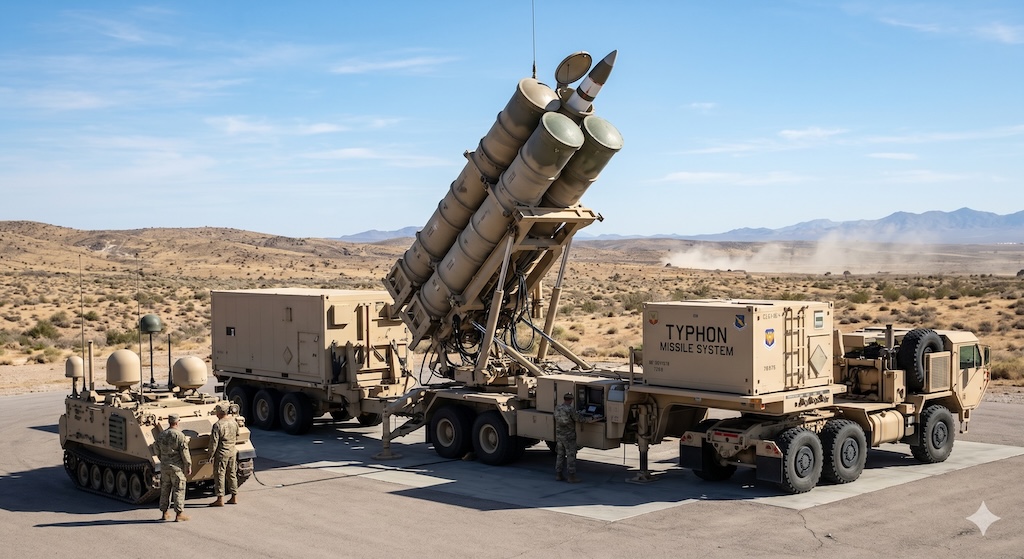
The ongoing Balikatan exercises marked a major milestone in Philippine and United States defense cooperation after the U.S. Army’s Typhon Mid-Range Capability missile system conducted its first live launch in the country since arriving in April 2024. The launch, confirmed by Balikatan 2026 spokesperson Colonel Dennis Hernandez, took place early Tuesday (05 May 2026) morning from Tacloban Airport and involved a Tomahawk Land Attack Missile striking a target area in Laur, Nueva Ecija — approximately 630 kilometers away. According to news reports, the missile was launched at around 0012H PhST and reached the target area at around 0100H PhST.
The missile launch coincided with active NOTAMs (Notices to Airmen) covering parts of Eastern Visayas and portions of the Philippine Sea. The advisories informed pilots and airlines of military exercise areas and potentially hazardous airspace associated with ongoing activities under Balikatan.
According to the issued NOTAMs, two separate military exercise corridors were established from 01 to 07 May 2026. Both exercise areas created a 15-nautical-mile buffer zone on each side of designated military activity routes, effectively forming a 30-nautical-mile-wide corridor that aircraft operators are advised to avoid.
The first NOTAM describes a southern exercise sector beginning near Tacloban and Samar before extending southward toward Surigao and farther into the Philippine Sea. The second NOTAM outlines a northern and eastern sector that starts near Leyte and Samar before curving northward toward the latitude of Catanduanes and Northern Samar. These temporary military activity zones are expected to support live-fire drills, high-speed military maneuvers, and other operational activities related to the joint exercises.
For pilots and airlines operating through Eastern Visayas, the NOTAMs carry significant operational implications. Aircraft transiting affected routes may encounter rerouting instructions from Air Traffic Control, particularly for flights crossing portions of the Philippine Sea or operating near the exercise corridors. Aviation authorities also warned that Temporary Segregated Airspace (TSA) could be activated depending on the timing and nature of military operations.
Military exercise NOTAMs of this scale are critical to aviation safety because they alert civilian operators to possible hazards such as missile launches, aerial maneuvers, and even GPS interference or jamming activities. Industry observers note that while such exercises are carefully coordinated with aviation authorities, they can still affect airline routing efficiency and flight planning, especially for carriers operating domestic routes through Central and Eastern Philippines.
The Tomahawk missile launched during the exercise is among the most recognized long-range cruise missiles in the world. Designed primarily for precision land attacks, the missile is capable of flying long distances at subsonic speeds while maintaining very low cruising altitudes to reduce radar visibility. In many operational scenarios, a Tomahawk may cruise at altitudes ranging from approximately 30 to 100 meters (100 to 330 feet) above terrain or sea level, depending on mission parameters and terrain-following requirements.
Defense analysts say the successful launch demonstrates the operational capability of the Typhon system within the Philippine theater while also highlighting the increasingly complex coordination required between military operations and civilian aviation management. As Balikatan 2026 continues, aviation stakeholders are expected to closely monitor additional NOTAMs and advisories that may affect flight operations across the region.