
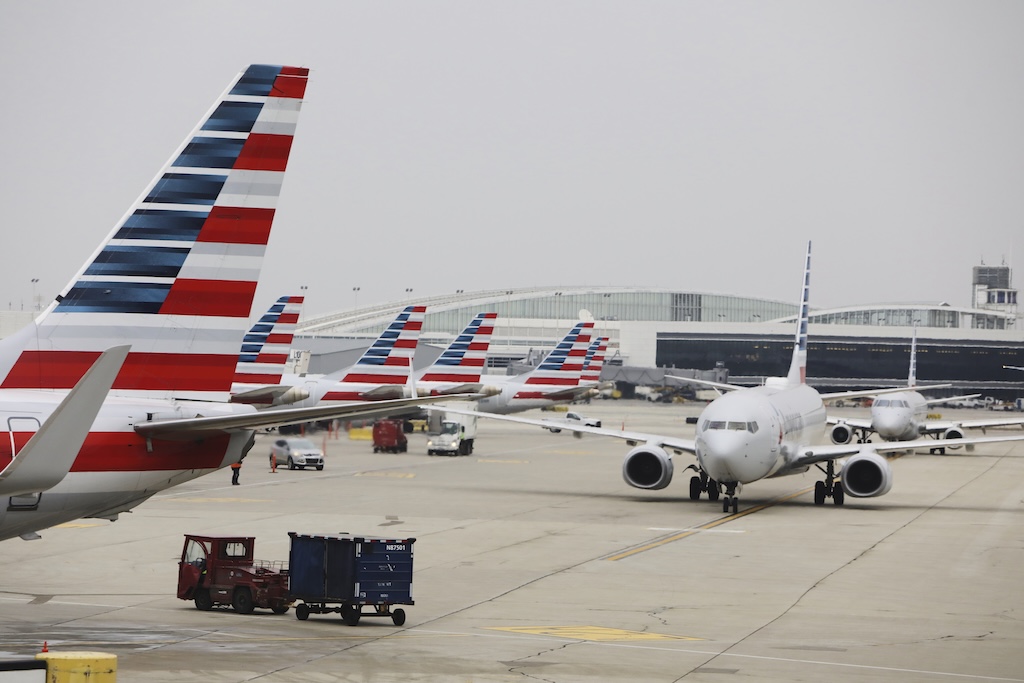
For decades, the standard routine on commercial flights has been as predictable as clockwork. You’re cruising at 35,000 feet, the captain announces the descent, and a few minutes later — at the magic threshold of 10,000 feet — the double-chime sounds. That “sterile flight deck” signal has traditionally been the cue for flight attendants to wrap up service, check seatbelts, and take their jumpseats for landing.
But American Airlines (AA) is rewriting the playbook, shifting the safety timeline much higher into the sky. Under an updated policy, American Airlines pilots now trigger the landing preparation sequence at 18,000 feet instead of 10,000 feet. The change is a direct response to an invisible, unpredictable, and growing threat in modern aviation: severe turbulence.
The Danger Zone: Below 20,000 Feet
While passengers often associate turbulence with high-altitude cruise levels, data tells a vastly different story about when injuries actually happen. According to research by the National Transportation Safety Board (NTSB), a staggering 65% of turbulence-related accidents and injuries during descent occur below 20,000 feet.
As an aircraft descends, it transitions from the smooth, thin air of the upper atmosphere into the thicker, more unstable air closer to the ground. This zone is rife with weather fronts, terrain-induced wind shear, and convective activity. Because flight attendants are usually on their feet during this phase — buttoning up galleys, collecting trash, and conducting compliance checks — they are highly vulnerable. In fact, NTSB data shows that flight attendants account for nearly 80% of all serious turbulence injuries commercial airlines experience.
What the New Protocol Looks Like
The extra 8,000 feet of buffer completely changes the pace of the cabin crew’s pre-landing routine. The process begins right at the 18,000-foot mark when pilots deliver the mandatory “prepare for landing” announcement. This serves as an immediate trigger for flight attendants to cease all remaining cabin service, lock down the heavy galley carts, and begin their final walk-throughs to secure the cabin.
The ultimate objective of this earlier start is a hard deadline at the traditional 10,000-foot mark. The goal is to have all safety checks completely wrapped up so crew members can be securely buckled into their jumpseats before, or absolutely no later than, the standard “sterile flight deck” chimes sound. By shifting the timeline upward, crew members are no longer racing against a rapidly descending aircraft to finish their duties. If the plane hits unexpected choppy air at 14,000 feet, the crew is already safely strapped in.
An Industry-Wide Shift
American Airlines isn’t alone in recognizing that the old 10,000-foot rule left too narrow a margin for error. JetBlue, Delta Air Lines, and Southwest have all adjusted their procedures in recent years to get crews seated earlier. As climate change continues to increase the frequency of Clear Air Turbulence (CAT) — the kind that doesn’t show up on weather radar — airlines are realizing that proactive scheduling is the best defense.
For the average AvGeek or frequent flyer, this policy shift will be noticeable. You can expect the “fasten seatbelt” sign to illuminate earlier, and the cabin crew will collect your final trash items well before the final approach. While it might mean putting your tray table up a few minutes earlier than you’re used to, it’s a small price to pay to ensure the crew members keeping you safe are kept safe themselves.