
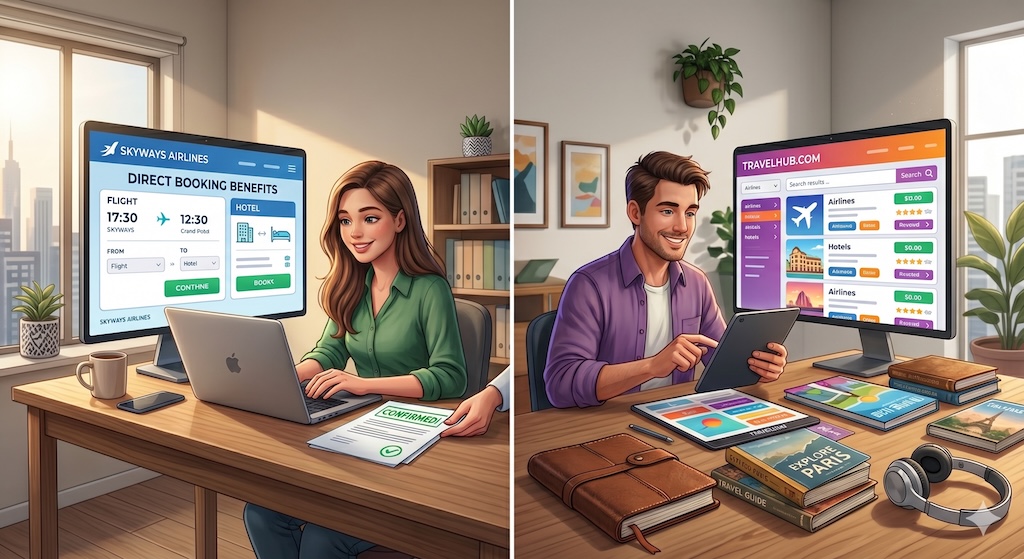
In the world of Philippine aviation, we are often conditioned to hunt for the lowest possible number. Whether it’s a quick hop to Boracay or a long-haul journey to London or Los Angeles, the temptation to use a third-party aggregator is massive. However, as any AvGeek will tell you, a “deal” on an international itinerary can quickly turn into a logistical nightmare.
When crossing borders, the complexity of your trip triples. Here is why booking directly with airlines and hotels is the only way to fly in 2026.
The “IATA Rule” and International Disruptions
On a domestic flight, a cancellation is a nuisance; on an international trip, it’s a crisis. If you book a multi-city itinerary (e.g., Manila to Tokyo to New York) through an Online Travel Agency (OTA) like Expedia, Booking.com (including Agoda and Priceline), Skyscanner, Kayak, and Trip.com, and the first leg is delayed, the airline has limited power to re-route you on a partner carrier if the ticket wasn’t issued by them.
When you book direct, you are protected by the airline’s “Contract of Carriage.” In the event of a missed connection in a foreign hub like Dubai or Singapore, the airline’s ground staff can re-accommodate you immediately. With an OTA, you are often left standing at a transfer desk, told to call a 1-800 number that doesn’t work overseas.
Navigating Evolving Visa and Entry Requirements
Entry requirements can still shift due to health protocols or diplomatic changes. Official airline apps are now integrated with real-time document verification systems. They notify you specifically about the visa or insurance you need for your specific passport. Third-party sites rarely offer this granular level of legal protection, leaving you at risk of being denied boarding at your airport of origin.
Avoiding the “Worst Room” Syndrome
Internationally, hotel margins are razor-thin. When a hotel in Paris or Tokyo sees a booking from a high-commission OTA, they often assign the “run of house” room: the one next to the elevator or overlooking the trash bins.
- The Direct Advantage: Hotels prioritize their direct guests for upgrades.
- The Math: A 10% discount on an OTA might save you PHP1,500, but a direct booking often includes a $30 USD (PHP1,700+) food and beverage credit or free high-speed Wi-Fi that would otherwise cost extra.
Simplified Refund Chains
International tickets involve currency conversions and different banking regulations. If you need a refund for a PHP60,000 international flight, getting it back from a foreign-based OTA can take months and involve heavy “administration fees.” When you book direct, you deal with the airline’s local office or their streamlined digital refund portal, ensuring your money returns to your Philippine bank account faster.
Direct vs. Third-Party: The International Breakdown
| Scenario | Direct Booking | Third-Party (OTA) |
| Missed Connection Abroad | Instant rebooking by ground staff | You must call the agent via long distance |
| Meal / Seat Preferences | Guaranteed and customizable | Often “requested” but not confirmed |
| Elite Status Perks | Lounge access, extra baggage | Often excluded from benefits |
| Price Drops | Many offer “Price Matches” | Usually non-refundable/No price drop protection |
AvGeekPH’s Take
For a 45-minute domestic flight, an OTA might be worth the risk. But for an international expedition involving multiple time zones and thousands of dollars, direct is the only way to go. It isn’t just about the flight; it’s about the security of knowing you won’t be stranded in a foreign airport.
Are you planning an international trip soon, and have you ever had an OTA “ghost” you during a flight delay?