
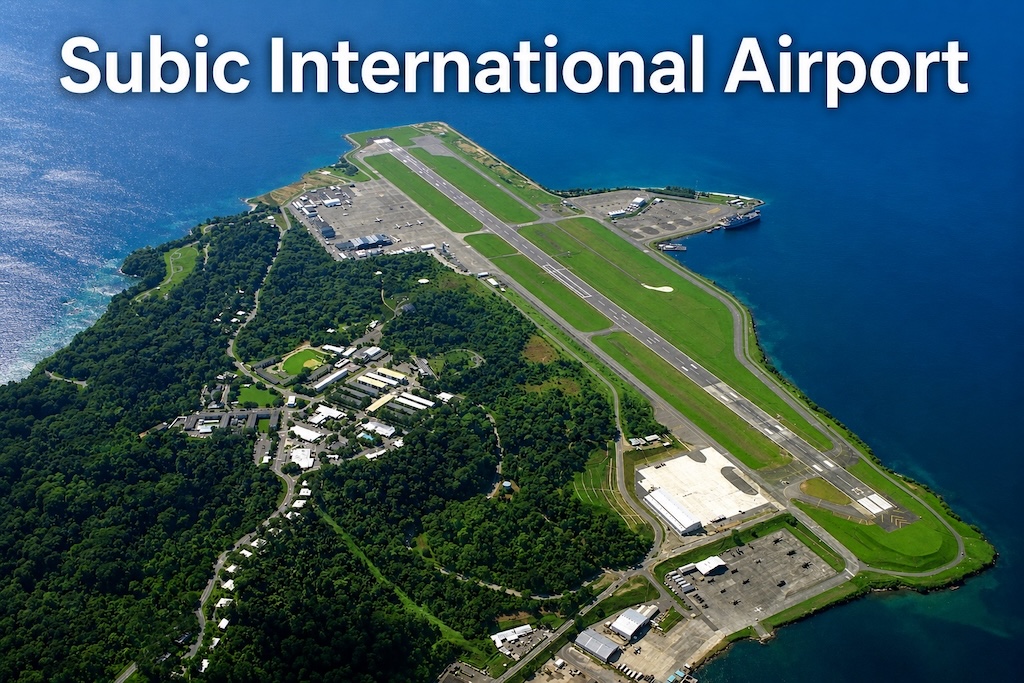
The Subic International Airport (SIA) Project has entered the Comparative Challenge stage, opening the door for qualified local and foreign private sector firms to challenge an unsolicited proposal for the modernization, expansion, operation, and maintenance of the airport under the Philippines’ Public-Private Partnership framework.
The Comparative Challenge is being undertaken pursuant to Republic Act No. 11966, or the Public-Private Partnership (PPP) Code of the Philippines, and its Implementing Rules and Regulations. The Subic Bay Metropolitan Authority (SBMA), which serves as the implementing agency, is inviting qualified challengers to submit comparative proposals for the long-term development and operation of the aviation facility inside the Subic Bay Freeport Zone.
Structured as an Operate-Rehabilitate-Add-Transfer (ORAT) concession, the SIA Project carries an estimated investment cost of PHP7 billion and a 25-year concession period, with a possible extension subject to agreed performance conditions.
Subic Airport Positioned for Aviation & Logistics Growth
The project seeks to capitalize on Subic’s strategic location and existing aviation infrastructure as demand for air cargo, logistics, and commercial aviation services continues to grow.
SIA occupies approximately 1.74 million square meters and includes around 502,000 square meters of apron space and 55,000 square meters of hangars and covered facilities. Its 2.7-kilometer asphalt runway can accommodate Category E commercial aircraft, including widebody types such as the Boeing B747 and Airbus A350.
The airport’s existing infrastructure and access to the wider Subic Bay Freeport Zone could make it an increasingly important aviation and logistics gateway as capacity constraints affect other airports in the country.
According to project information, the Philippines recorded a 6.6% compound annual growth rate from 2014 to 2024, while continued expansion in e-commerce and regional trade is expected to generate additional demand for air freight. The country is projected to face an air cargo capacity shortfall of around 200,000 tonnes, strengthening the case for additional airport and logistics infrastructure.
Major Rehabilitation & Expansion Planned
Under the project, the private partner will undertake substantial rehabilitation of SIA’s existing facilities, many of which require major repairs and refurbishment. Work will cover facilities on the southwest and southeast aprons, including structural and architectural repairs and the maintenance or replacement of mechanical and electrical systems.
Operational and safety improvements will also form part of the concession. Among these is the Runway End Safety Area (RESA) Improvement Project, which calls for extending the existing RESA to provide a larger obstacle-free buffer beyond the runway and comply with applicable aviation safety standards.
Airport operations will require coordination with the Civil Aviation Authority of the Philippines (CAAP) for air traffic control and aviation safety requirements, as well as with PAGASA for meteorological and hydrological services.
The project also calls for new infrastructure to support expanded cargo, warehousing, leasing, and other airport-related businesses.
The planned Midway Apron Development will feature two warehouse buildings with a combined floor area of approximately 22,400 square meters, complemented by a 32,000-square-meter aircraft staging and parking area.
Another major component, the North Airport Land Development, will cover approximately 88,000 square meters divided into four parcels. These areas are envisioned for warehouse facilities, a hangar and storage facility, and additional aircraft apron space.
Private Operator Gets Access to Multiple Revenue Streams
Beyond conventional airport operations, the winning concessionaire will be able to pursue revenue opportunities from regulated and unregulated aeronautical services, cargo handling, warehousing, logistics, commercial leasing, and other non-aeronautical businesses.
The project also offers potential fiscal incentives. Subject to applicable eligibility and registration requirements, a concessionaire registered with SBMA as an Export Enterprise may qualify for a 5% Special Corporate Income Tax (SCIT) for up to 16 years from the start of commercial operations, with a possible extension under Republic Act No. 12066 and its implementing regulations.
Qualified enterprises under the SCIT regime may also benefit from exemptions from national and local taxes, customs duties and VAT on eligible importations, as well as zero-rated VAT treatment for qualified local purchases.
SBMA, meanwhile, will continue providing key airport support functions throughout the concession period. It will facilitate permits and regulatory coordination, assist the private partner in securing necessary government approvals, monitor compliance with the concession agreement, and coordinate with aviation agencies and other stakeholders.
Comparative Challenge Underway
The Comparative Challenge for the Subic International Airport Project officially commenced on 27 April 2026, while the Instructions to Challengers were released on 31 July 2026.
Interested and qualified Philippine and foreign firms may participate subject to the eligibility and qualification requirements specified in the procurement documents and applicable Philippine laws.
Prospective challengers must pay the prescribed Participation Fee to obtain the bid documents and gain access to the project’s Virtual Data Room (VDR). The VDR contains technical information, due diligence materials, project documents, and other information needed to prepare a comparative proposal.
The government is positioning the project as more than a rehabilitation of an existing airport. If successfully implemented, the PHP7 billion PPP could transform Subic International Airport into a more capable aviation, air cargo, warehousing, and logistics hub while providing additional airport capacity to support the continued economic development of the Subic Bay Freeport Zone.
Interested proponents can obtain further information through the SBMA and PPP Center of the Philippines, including the Project Information Memorandum, Invitation for Comparative Proposals, and Instructions to Challengers.