
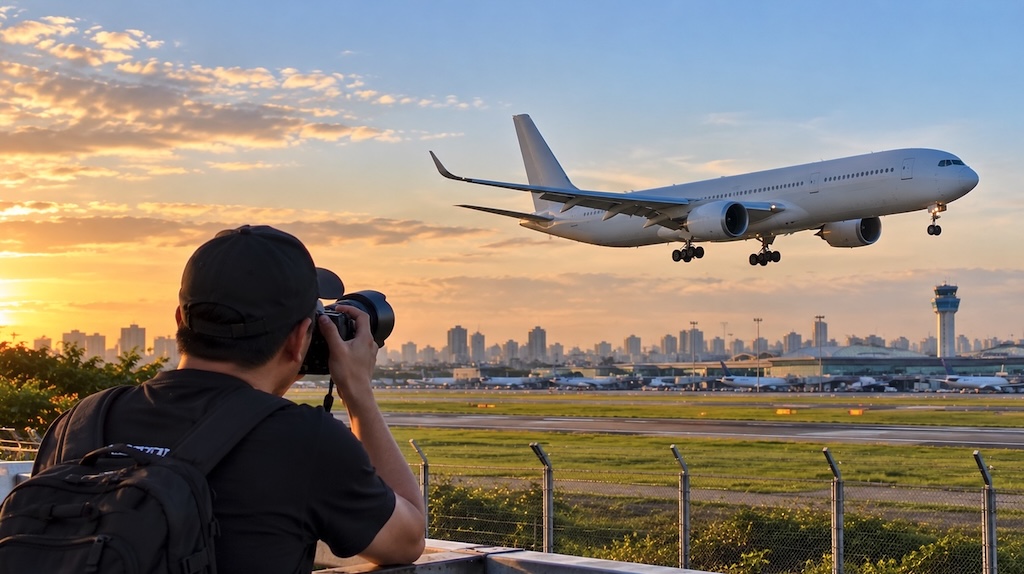
What began as a pursuit of passion for an avid planespotter has quickly escalated into serious legal trouble with federal law enforcement authorities in the United States. Weiheng Zeng, a 24-year-old Chinese national and undergraduate student studying at the University of Waterloo in Ontario, Canada, is currently facing federal charges of making false statements to U.S. government agents after his aviation photography activities near restricted areas triggered a counterintelligence investigation at Chicago’s O’Hare International Airport (ORD).
The legal situation stems from an security incident that occurred on 21 April 2026, when airport surveillance cameras at Chicago O’Hare captured an individual inside a restricted FedEx freight zone. Driven by a desire to capture unique visual angles of rare aircraft for his portfolio, Zeng drove his dark blue Chrysler Town & Country minivan directly onto the secure property. Authorities reviewing surveillance footage observed the photographer climbing atop a forklift to obtain a higher vantage point for his shots, as well as checking nearby cargo trailers to gain closer access to the airfield, actions that immediately set off security alarms across the facility.
Law enforcement officers subsequently traced the minivan’s Ontario license plates back to Zeng. Months later, when he attempted to cross into the U.S. at the Ambassador Bridge border crossing in Michigan, U.S. Customs and Border Protection officers flagged his vehicle for a secondary inspection.
During interrogation by federal agents, Zeng maintained that he was simply an enthusiastic aviation photographer taking pictures to post on flight-tracking platforms and online aviation forums. However, his initial nervousness during questioning resulted in inconsistent statements regarding his travel history and digital records. A detailed search of his electronic devices uncovered photographs of commercial and cargo aircraft alongside images of Zeng participating in airsoft games wearing tactical gear, prompting federal investigators to examine potential foreign connections.
Further examination of Zeng’s digital footprint revealed a common web-based freelance photography arrangement. Zeng disclosed that he had accepted photography assignments from an online contact who paid between $20 and $30 per photo for specific commercial and cargo tail numbers. To manage the large volume of digital file transfers and adhere to the buyer’s privacy preferences, Zeng utilized dedicated SIM cards and routinely cleared the image caches on his mobile phone. He also confirmed having previously photographed aircraft around Toronto Pearson International Airport (YYZ), while admitting he had considered visiting major airports in Las Vegas and Orlando for future planespotting trips before recognizing the associated security risks.
Despite Zeng’s explanation that his actions were merely an overzealous attempt to expand his photography portfolio and earn supplementary income, federal prosecutors formally charged him with making false statements during border questioning due to contradictory statements regarding his motives for entry and photography habits. Zeng subsequently appeared in federal court in Detroit, where he agreed to remain in custody pending further legal proceedings, serving as a solemn warning to the global aviation community regarding strict airport perimeter security.