
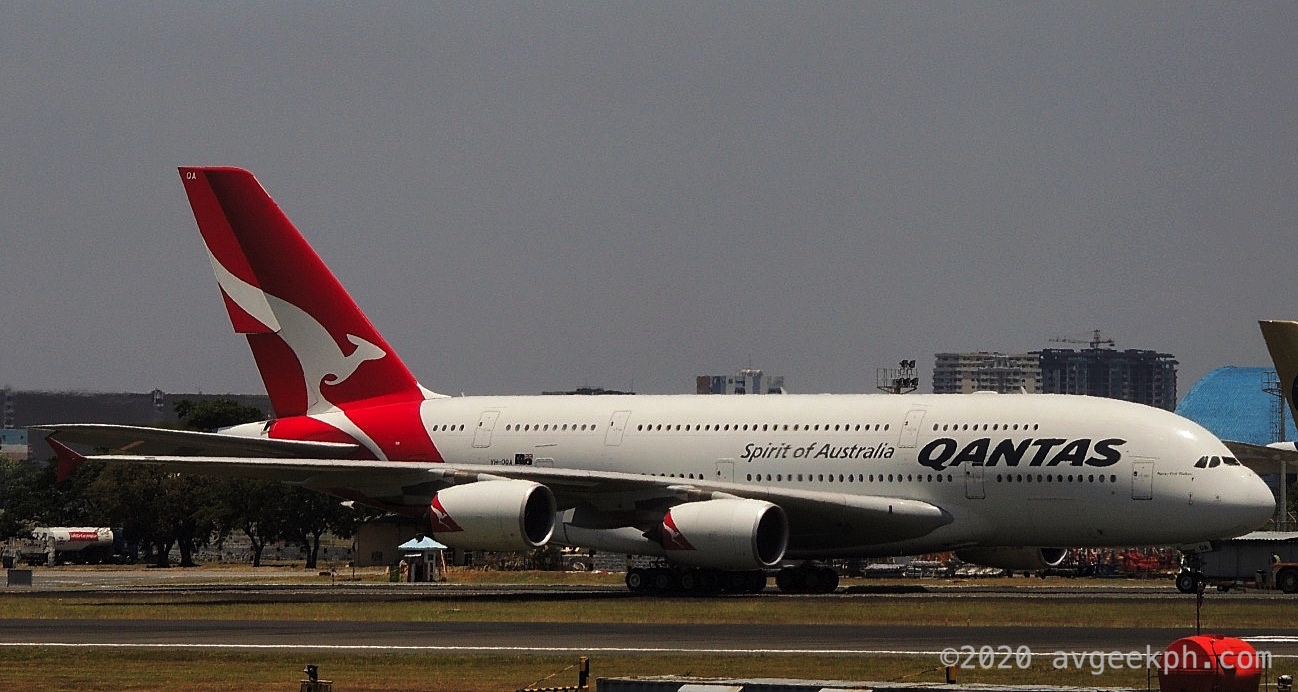
In a decision that highlights the changing economics of long-haul commercial aviation, Qantas Airways (QF) has officially announced plans to accelerate the phase-out of its Airbus A380 fleet. The Australian flag carrier will begin retiring its ten remaining double-decker superjumbos starting in early 2028, pulling forward its original fleet retirement timeline by four full years. The strategic adjustment marks a clear shift away from four-engine mega-transports toward hyper-efficient twin-engine widebodies. By the end of the decade, the iconic red-tailed superjumbo, which has carried millions of passengers across the Pacific and Kangaroo routes since 2008, will be entirely absent from Australian skies.
The acceleration reflects the growing operational and economic pressure facing four-engine long-haul aircraft across the global airline industry. Production of the massive double-decker jet ceased when Airbus assembled the final A380 in 2021, causing maintenance costs to escalate as global supply chains tighten and component prices climb. Speaking to media following the airline’s latest financial earnings presentation, Qantas Group CEO Vanessa Hudson highlighted the increasing financial friction of maintaining the aging fleet.
“The A380s are no longer in production, which means that the maintenance expenses for those aircraft will increase over time, as will the costs associated with disruptions,” Hudson explained. She noted that accelerating the phase-out will unlock approximately A$300 million (US$215 million) in net cash flow benefits through fiscal 2031 by avoiding heavy maintenance cycles. Surging global aviation fuel costs and ongoing geopolitical volatility have further disadvantaged the heavy quad-engine airliner, especially as modern twin-engine jets burn up to 25% less fuel per seat while offering lower operating costs and significantly greater schedule flexibility.
To replace the massive 485-seat capacity of the superjumbo, Qantas is executing a comprehensive long-haul fleet renewal program centered on modern twin-engine airframes. The primary successor to the A380 will be the Airbus A350-1000. Qantas is taking delivery of two distinct variants of the twin-engine jet: the Airbus A350-1000ULR and the Airbus A350-1000LR. Dedicated ultra-long-range A350-1000ULR models are built for Project Sunrise, the airline’s historic initiative to launch non-stop flights connecting Sydney and Melbourne directly to London and New York. Meanwhile, standard long-range A350-1000LR versions will inherit former flagship A380 routes running from Sydney to Los Angeles, Singapore, and London.
In addition, Qantas is expanding its fleet of Boeing B787 Dreamliners, which will absorb heavy long-haul traffic on transpacific and long-haul routes such as Sydney to Dallas-Fort Worth and Johannesburg. While the incoming A350s carry fewer overall passengers, favoring high-density premium seating like first-class roomettes and doored business suites, Qantas executives emphasize that the transition aligns with changing traveler behavior. Premium ticket sales across the international network of Qantas have been growing at double the rate of standard economy, making smaller, premium-heavy aircraft far more profitable per departure than mass-capacity superjumbos.
Qantas is far from alone in stepping away from the superjumbo. Global carriers like Air France, China Southern, and Malaysia Airlines have already completely retired their A380 fleets, while Korean Air and Qatar Airways plan similar departures in the coming years. Outside of Dubai-based giant Emirates, which intends to keep flying its massive fleet of over 100 A380s into the 2040s, the global presence of the world’s largest passenger jet is rapidly contracting. For Australian travelers, the countdown has officially begun. Flying high on the upper deck of the Qantas “Flying Kangaroo” superjumbo remains a distinct experience, but aviation enthusiasts have just a few short years left to log a flight before the superjumbo leaves the fleet for good.