
AirAsia Group Berhad, formerly known as AirAsia X Berhad, has reaffirmed its focused and prudent operational strategy in navigating the current aviation landscape. Airlines globally continue to contend with ongoing geopolitical uncertainty, fuel price volatility, industry-wide cost pressures, and shifting market dynamics. Despite these sector-wide headwinds, the group remains strongly positioned to absorb ongoing pressures through its resilient low-cost business model, strategic fare optimisations, and continuous growth in ancillary revenue, keeping its primary focus locked on long-term sustainable expansion.
Addressing the group’s trajectory and current market conditions, Bo Lingam, Group CEO of AirAsia Group, said: “We have been through many crises before in our 25-year journey, with COVID-19 being by far the most challenging. What is different today is that people can still fly and travel continues. Given the current environment, we are taking a disciplined approach to managing the business – adjusting capacity, controlling costs, having active discussions with key stakeholders and strengthening our resilience. While there has been much speculation in the media, much of it inaccurate, there is no question about our commitment to business continuity and continuing to serve our guests.”
Demonstrating this disciplined approach, AirAsia successfully recovered approximately 70% of fuel price increases during the second quarter through dynamic pricing strategies and reduced non-fuel operating costs. The Group also executed a tactical capacity reduction of 20% to 25% during the third quarter, which traditionally represents a softer travel period across the region. Operations are now actively preparing to ramp capacity back toward pre-war levels in the fourth quarter, directly aligning with the strong demand expected during the peak year-end travel season in the Asia-Pacific region.
In addition to capacity management, AirAsia is actively executing a long-term fleet optimization program to transition toward a significantly more efficient aircraft mix. The group has already returned 25 older, less fuel-efficient aircraft on favorable commercial terms, effectively reducing its overall fixed lease burden while accelerating the shift toward modern narrow-body jets. Furthermore, with short-haul and long-haul operations now consolidated under a single Group structure, the airline has gained greater flexibility to optimize fleet deployment and capacity network-wide, placing an enhanced focus on route profitability and sustainable long-term financial returns.
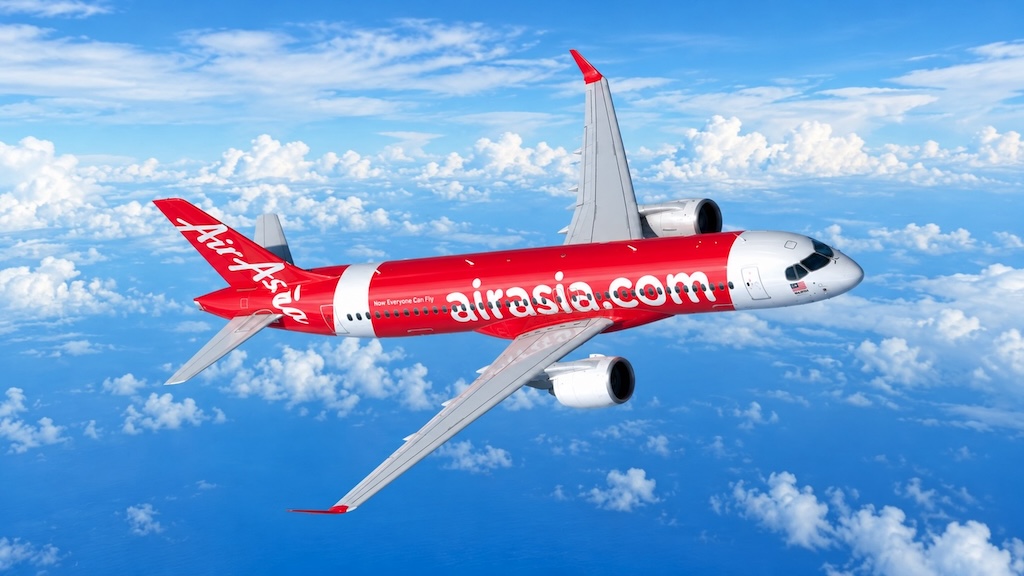
Complementing its long-term fleet strategy, Tony Fernandes, Co-founder and Advisor of AirAsia Group, said during the airline’s media briefing this morning that the Airbus A220 will be “transformational” for the group and will play a particularly important role in its operations in the Philippines and Indonesia. AirAsia placed a firm order for 150 Airbus A220-300s in May 2026, with options for another 150 aircraft, potentially bringing its A220 fleet to 300. The airline will also be the launch customer for the A220’s new 160-seat configuration, with the first deliveries expected to begin in 2028. The aircraft are planned for deployment across ASEAN and the wider Asia-Pacific region.
Regarding its capital and financing requirements, the group continues to maintain full transparency by disclosing all material developments through official exchange filings and public announcements in accordance with regulatory standards. Management reiterated that planned fundraising exercises are primarily targeted at debt restructuring, balance sheet consolidation, and refinancing to optimize long-term capital structure rather than funding operational shortfalls. The Group actively evaluates strategic options to ensure ongoing operational resilience, with official updates to be released when terms are finalized, advising market stakeholders to rely exclusively on formal regulatory disclosures.
Highlighting the airline’s historical resilience and hub network strength, Lingam added, “AirAsia has always been an airline that adapts, adjusts and finds a way forward and we have a demonstrable track of doing so. We remain fully focused on maintaining business continuity and preserving operational stability through active, ongoing engagements with our key partners. By staying disciplined and working collaboratively across the ecosystem, we are strengthening our resilience and preparing for the opportunities ahead. The strength of our network is evident in Kuala Lumpur International Airport (KUL)’s recent recognition as the world’s fourth most connected international megahub and No. 1 low-cost megahub1, a position it has held since 2023, with AirAsia as the dominant carrier behind this connectivity.”
Reiterating confidence in the carrier’s core business model, Lingam said in closing, “We are managing industry-wide headwinds from a position of strength, executing a clear and strategic plan for sustainable and profitable growth. We are encouraged by the outlook for the peak fourth quarter and remain confident in the long-term potential of AirAsia. Our focus is on the fundamentals of our business and we will not be distracted by unsubstantiated speculation from anonymous sources.”