
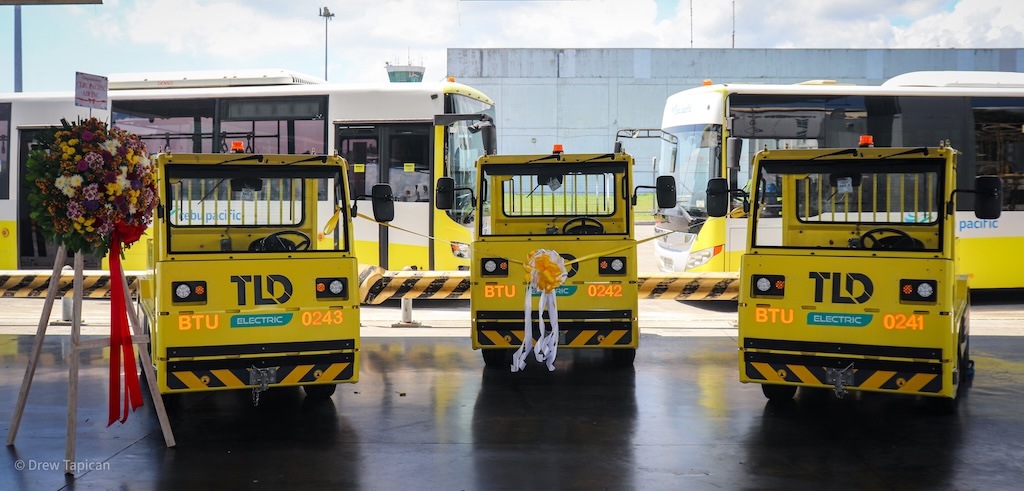
In preparation for the surge of travelers during the Undas peak travel season, Cebu Pacific (5J | CEB) has deployed three Electric Baggage Tractors (eBTUs) along with two passenger buses to reinforce ground handling operations at Davao International Airport (DVO). The introduction of these units marks an operational milestone, establishing CEB as the first Philippine air carrier to introduce electric ground support equipment into its operations at the Davao gateway.
The newly deployed ground fleet serves critical operational functions on the airport ramp. The three electric baggage tractors are specifically tasked with towing carts loaded with passenger baggage and cargo directly between storage areas and aircraft. Simultaneously, the two buses are designated to transport passengers between the airport passenger terminal and aircraft positioned at remote parking stands, ensuring passenger movement remains seamless when aircraft do not dock directly at the terminal gates.
This ramp expansion directly supports the carrier’s broader operational growth at its Davao hub. Performance figures from the first half of 2026 indicate that Cebu Pacific offered nearly 2 million seats and transported over 1.4 million travelers through Davao, representing a 4% increase in passenger traffic compared to the same period in the preceding year.
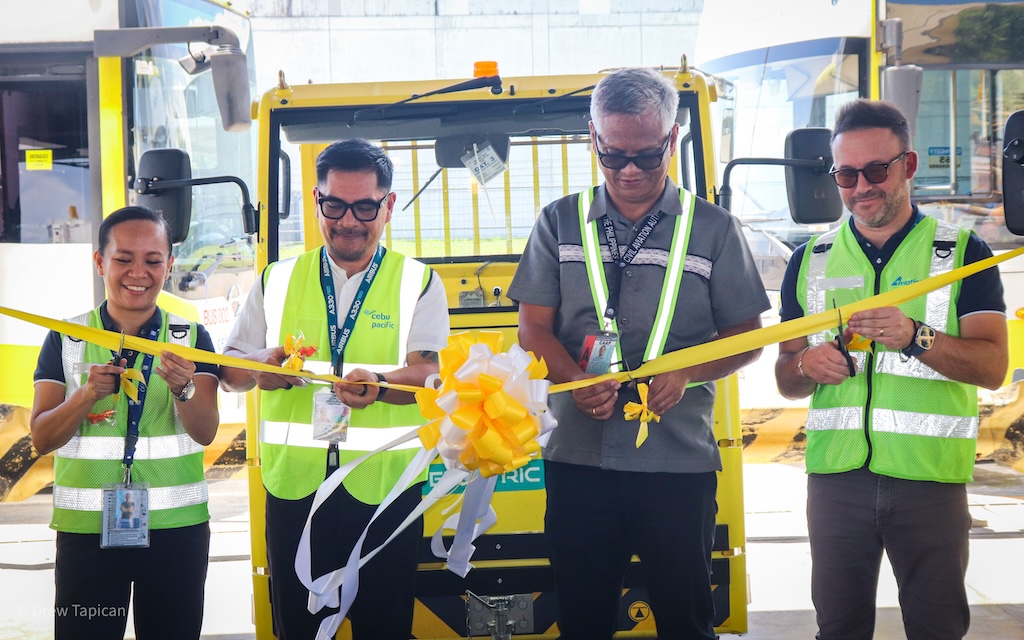
With the addition of the three electric baggage tractors in Davao, Cebu Pacific’s nationwide fleet of electric ground support equipment (GSE) has reached a total of 50 units across its stations in Manila, Cebu, and Davao. The airline’s electric GSE lineup also incorporates pushback tractors, which are responsible for repositioning aircraft backward away from their terminal parking bays before departure, as well as lower-deck loaders designed for the mechanical loading and unloading of baggage and air cargo containers.
Highlighting the importance of ramp infrastructure during peak periods, Lei Apostol, CEB Vice-President for Customer Service Operations, emphasized the essential role of ramp teams and ground equipment in maintaining schedule integrity and advancing sustainability, “Passengers may not always see the work happening on the ramp, but behind every flight is a fleet of vehicles and equipment moving baggage, cargo, and aircraft. As the busiest travel season begins, adding more vehicles in Davao helps us keep operations running smoothly and passengers on schedule. The new tractors are also electric, which helps us gradually reduce emissions from our ground operations.”
The operational deployment at Davao International Airport aligns with the airline’s broader decarbonization strategy spanning both flight operations and ground-level logistics. As part of this sustainability framework, Cebu Pacific is working toward operating an all-new engine option (NEO) fleet by 2030, leveraging advanced aircraft technology that burns approximately 15% less fuel compared to earlier generation aircraft models.
Complementing its fleet modernization, the airline continues to integrate ground technologies designed to curb aircraft reliance on fossil-fuel-burning auxiliary equipment while parked. In October 2026, Cebu Pacific became the first domestic carrier to activate bridge-mounted equipment (BME) at Clark International Airport. This system supplies parked aircraft directly with ground-based electrical power and pre-conditioned cooling air, minimizing the operational use of fuel-powered aircraft auxiliary power units. Today, Cebu Pacific maintains scheduled services across a commercial network of 35 domestic and 26 international destinations spanning Asia, Australia, and the Middle East.
Photos by Drew Tapican via Cebu Pacific.