
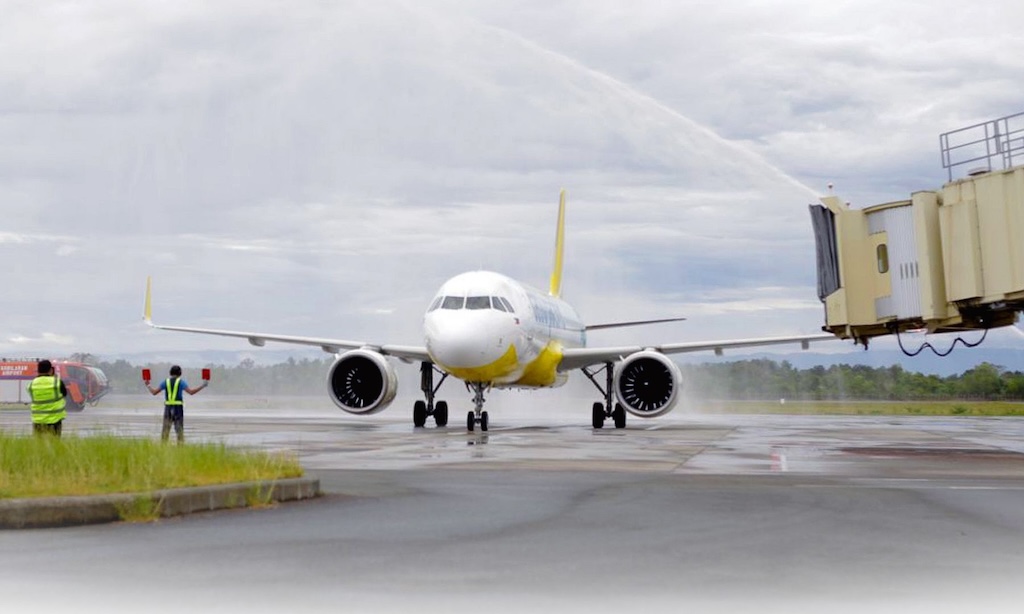
The aviation landscape in the Visayas reached a new altitude on 02 May 2026, as Bohol-Panglao International Airport (BPIA | TAG) officially welcomed its first-ever direct chartered flight from Narita (NRT), Japan. Operated by the Philippines’ leading low-cost carrier, Cebu Pacific, flight 5J 8811 taxied onto the apron of the country’s premier eco-airport, carrying 163 Japanese tourists and marking a pivotal moment for Bohol’s international connectivity.
This inaugural flight is more than just a single arrival; it represents a calculated effort to tap into the high-value Japanese tourism market. The arrival of over 160 visitors from Tokyo-Narita underscores the growing global appeal of Bohol as a destination that offers a unique blend of nature, heritage, and modern resort luxury.
Governor Erico Aristotle Aumentado shared his optimism regarding the event, noting that the development is a highly encouraging sign for the province. He emphasized that the local government is hopeful this chartered service will serve as a catalyst for regular, scheduled international flights from Japan, which remains a cornerstone of the Philippine tourism industry. The influx of international travelers is expected to provide a substantial boost to the local economy, benefiting everyone from large-scale resorts to community-based tourism initiatives.
Aboitiz InfraCapital: Steering BPIA Toward Global Standards

The success of this charter operation is the result of nearly a year of intensive diplomatic and commercial groundwork led by Aboitiz InfraCapital Bohol Airport Corporation (ABAC), the private operator of BPIA. The journey to this maiden flight began in September 2025, when ABAC joined Governor Aumentado’s official delegation during a high-level business mission to Japan.
During that mission, ABAC engaged in exclusive negotiations with JTB Corporation, one of Japan’s largest and most influential travel agencies. By showcasing BPIA’s state-of-the-art infrastructure and its capacity to handle international wide-body and narrow-body operations, ABAC successfully positioned the “Green Gateway” as a viable alternative to larger hubs like Manila or Cebu.
To ensure the airport was prepared for the influx of Japanese travelers, ABAC conducted rigorous on-site inspections in late 2025. These assessments focused heavily on the Immigration, Customs, and Quarantine (ICQ) facilities. Ensuring a seamless “touchdown-to-transfer” experience is critical for maintaining the high standards expected by Japanese tour operators.
General Manager Aldwin Uy expressed pride in the milestone, crediting the achievement to the synergistic partnership between Cebu Pacific, the provincial government, and Japanese stakeholders. He noted that the flight serves as a “proof of concept,” demonstrating that BPIA is fully equipped to handle sustained international traffic while maintaining its commitment to passenger comfort and environmental sustainability.
Bohol’s Eco-Gateway to the World
As the Philippines’ first “eco-airport,” Bohol-Panglao International Airport continues to lead by example in sustainable aviation. By opening direct pathways for international markets, the airport reduces the carbon footprint associated with multi-leg domestic transfers and provides a more direct, inclusive route to the heart of Central Visayas.
With local stakeholders and airport authorities working in lockstep, the trajectory for Bohol’s aviation sector remains firmly upward. The success of flight 5J 8811 has set the stage for BPIA to evolve from a regional terminal into a primary international gateway, further cementing the Philippines’ status on the global travel map.