
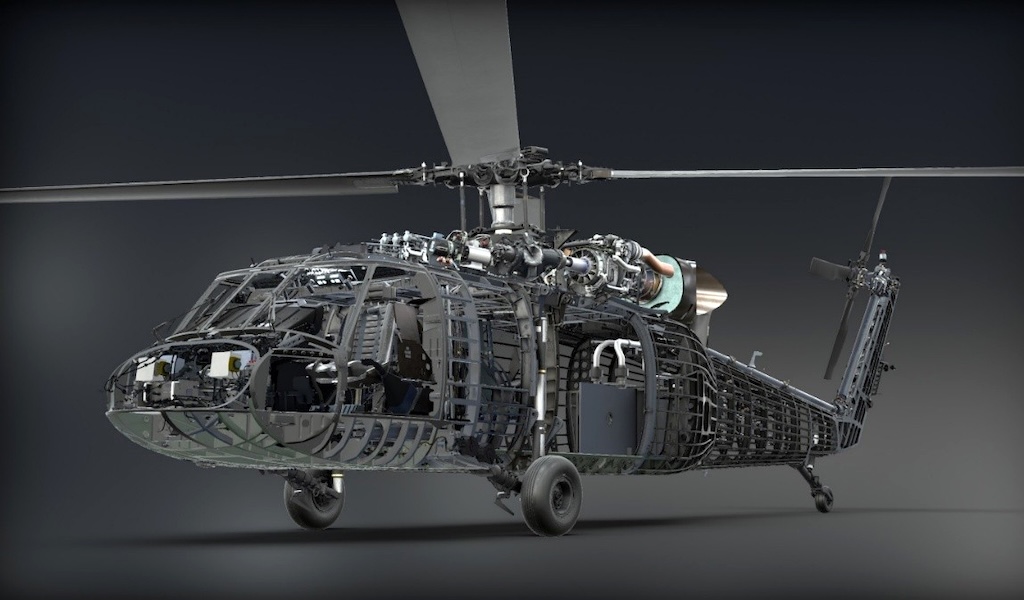
Lockheed Martin has officially signed a Direct Commercial Sale contract with the Philippine Department of National Defense to deliver a state-of-the-art S-70i Black Hawk Full Flight Simulator, Virtual Maintenance Trainer, and associated courseware to the Philippine Air Force (PAF). This milestone deal substantially boosts the military’s capability to train pilots and maintenance personnel locally while supporting the country’s broader defense modernization initiatives. The agreement also represents a major expansion for Lockheed Martin’s training and simulation portfolio, marking its first-ever customer order for dedicated Lockheed Martin S-70i Black Hawk training devices.
The Philippine Air Force currently operates an expanding fleet of Sikorsky Black Hawk utility helicopters, relying heavily on the rotary-wing platform for a diverse array of vital national missions. These operations include critical search and rescue efforts, humanitarian assistance and disaster relief, aerial firefighting, and rapid troop transport across the vast Philippine archipelago. By establishing a modern domestic training infrastructure, the new simulation suite significantly strengthens the air force’s operational readiness, allowing local personnel to maintain peak proficiency without relying solely on overseas facilities.
“It’s a privilege to partner with the Philippine Air Force with a suite of systems to support their training requirements as they grow their fleet of S-70i Black Hawk helicopters. This contract award is a long-term investment in the PAF’s mission readiness and reflects Lockheed Martin’s proven ability to deliver sustainment solutions across the entire operational pipeline,” according to Tim James, Vice President of Air and Commercial Solutions at Lockheed Martin.
The advanced hardware highlights Lockheed Martin’s focus on high-fidelity simulation and digital twin technology. The S-70i Black Hawk Full Flight Simulator acts as a digital twin training solution, precisely recreating the visual cues, flight characteristics, and physical sensations of operating an actual S-70i aircraft. Complementing this, the Virtual Maintenance Trainer leverages immersive, physics-based digital models of every major airframe subsystem — spanning hydraulics, electrical setups, and complex avionics — giving maintenance specialists a comprehensive, risk-free environment to hone their skills.
“Lockheed Martin remains committed to its longstanding partnership with the Philippine Air Force. Through these advanced training systems, we effectively support the needs of its growing force and expanding Black Hawk fleet. These solutions build on the PAF’s ongoing efforts to enhance training, ensuring crews and maintainers remain mission-ready while advancing their broader modernization goals,” said William Blair, Vice President and Regional Chief Executive, Asia & India.
To ensure continuous, long-term operational success, the newly signed agreement incorporates full sustainment support and spare parts availability extending through 2032. While the localized in-country training capability is actively being constructed and established in the Philippines, the Philippine Air Force will continue to send its Black Hawk aviators to train at the U.S.-based Sikorsky Training Academy.
Lockheed Martin offers a versatile range of S-70i Black Hawk training devices, spanning from compact desktop trainers to fully immersive, full-motion virtual environments. By employing a exact digital twin of the Black Hawk, the company delivers accurate representations of the aircraft’s onboard systems, component architecture, and operational configurations to dramatically improve training outcomes. Furthermore, utilizing a digital thread tied to the helicopter’s operational flight program allows Lockheed Martin to build and deploy high-fidelity flight simulations in a matter of days rather than years, keeping pace with ongoing aircraft upgrades. Beyond the Black Hawk, Lockheed Martin continues to provide extensive training infrastructure for various other military aircraft, including the CH-53K, F-35, F-16, and C-130J.