
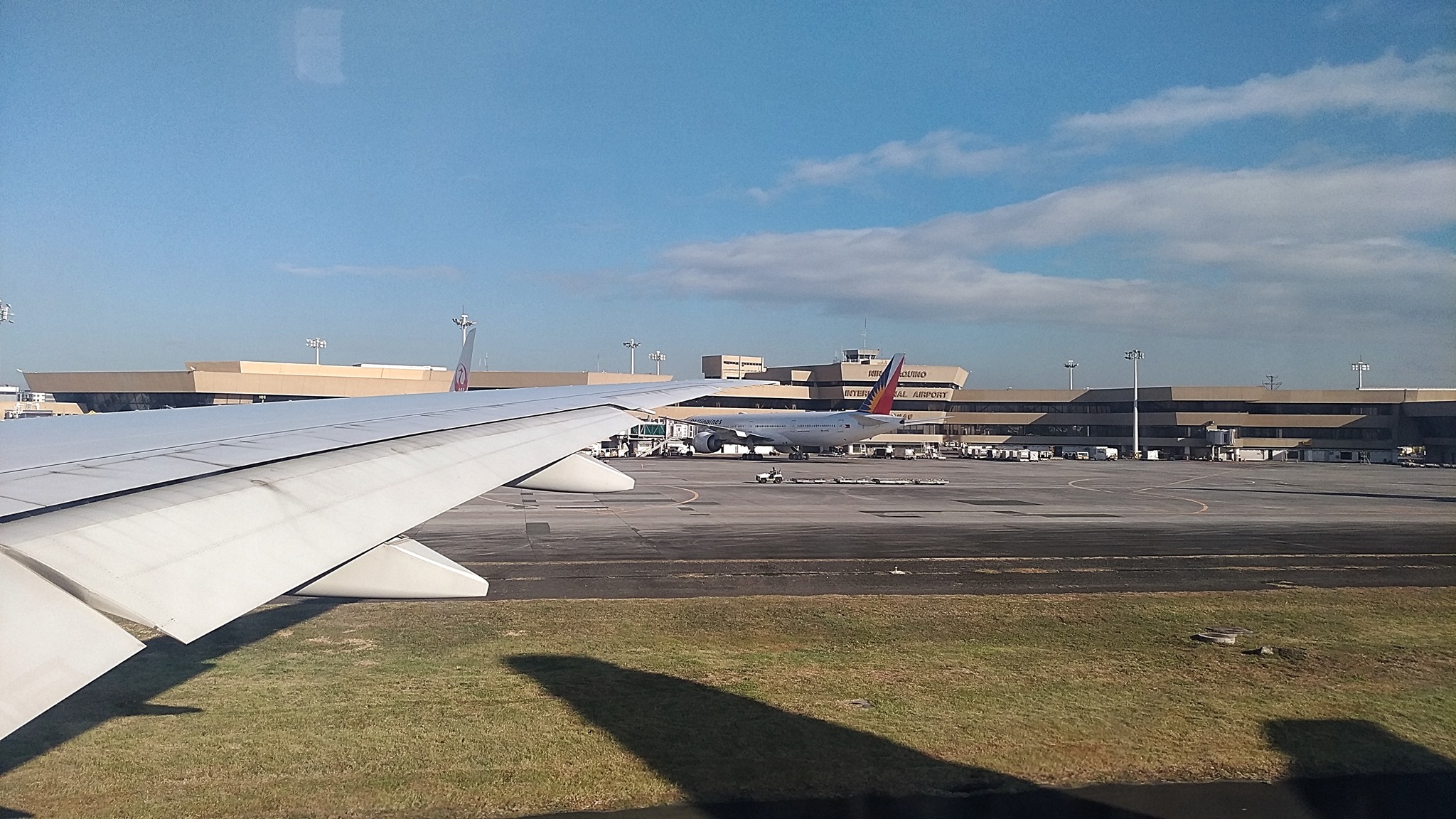
Two years have passed since New NAIA Infrastructure Corporation (NNIC), led by San Miguel Corporation (SMC), took over the operations and management of Ninoy Aquino International Airport (NAIA) on 14 September 2024.
And yes, NAIA looks better.
The toilets are cleaner. Walls have been repainted. New seats have appeared. Signs and flight information displays have been replaced. Air-conditioning systems have received attention. Aging equipment has been repaired or replaced, and many areas of the terminals are simply more presentable than they were two years ago.
These are welcome developments, and credit should be given where it is due.
But on the second anniversary of the takeover, perhaps it is time to stop asking whether NAIA looks better and start asking whether we are seeing the fundamental transformation of the country’s primary international gateway.
PHP6.8B Spent — But What Has Changed?
NNIC says it has spent PHP 6.8 billion on completed and ongoing repairs, rehabilitation, replacement of aging equipment, passenger-processing systems and capacity improvements.
That is the operator’s reported figure, and it is certainly a substantial amount of money.
For passengers, however, the more important question is not simply how much has been spent. It is whether that spending is producing measurable improvements in airport operations.
A renovated restroom makes an excellent before-and-after photograph. So does a freshly painted terminal, a row of new seats or refurbished passenger areas.
But these are also among the basic things expected from the operator of a major international airport.
Clean toilets, working escalators and elevators, comfortable seats, adequate air-conditioning and presentable terminals should be the baseline — not the ultimate measure of airport modernization.
The more meaningful improvements are harder to photograph.
How much faster is baggage being delivered? Are passenger queues getting shorter? Are aircraft spending less time waiting for gates? Are aerobridges more reliable? Has aircraft movement efficiency improved? Are power, IT and other critical airport systems becoming more resilient?
Can NAIA handle disruptions and peak travel periods better than it could two years ago?
These are the metrics that should increasingly define NNIC’s performance.
What Happened to the Airline-Operated Lounges?
Changes are also happening behind some of NAIA’s more visible renovations.
Airline-operated lounge space has been consolidated in some areas as privately operated common-use lounges expand.
There is a reasonable operational argument for this approach. Airport space is limited, and a common-use lounge serving several airlines throughout the day can potentially make more efficient use of valuable terminal real estate than individual facilities used only around particular flight schedules.
But efficiency for the airport operator does not automatically mean a better experience for every passenger.
An airline’s own lounge forms part of that carrier’s premium product. Airlines can control their food, service, branding and overall passenger experience.
A common-use lounge may provide an excellent experience as well, but it is a different model.
Passengers are therefore entitled to ask whether replacing or consolidating airline-operated lounge space represents an improvement primarily in passenger experience, more efficient use of airport space, a commercial decision — or some combination of the three.
The important thing is transparency about why these changes are being made and how passengers benefit from them.
Where Exactly is My Airline This Time?
Then there are NAIA’s repeated terminal assignment changes.
Terminal rationalization is understandable. NAIA’s terminals were developed at different times, have different capacities and were never designed as one seamlessly integrated complex.
Moving airlines can therefore be a legitimate way of balancing passenger volumes and making better use of available gates and terminal space.
But repeated changes also create passenger confusion.
Travelers who have used the same terminal for years increasingly need to double-check where their airline is operating before heading to the airport.
At some point, NAIA needs a terminal assignment strategy that passengers can easily understand and that remains reasonably stable. The public should also be told what the end-state is supposed to look like.
Which airlines are ultimately intended for Terminal 1? Which belong in Terminal 2? Which will remain at Terminal 3?
And how will Terminals 4 and the proposed Terminal 5 fit into that strategy?
Without a clearly communicated long-term plan, repeated airline transfers can look less like permanent rationalization and more like continuously moving pieces around an already crowded airport.
What Happened to Terminal 4?
Terminal 4 was closed in November 2024 for rehabilitation.
Since then, timelines surrounding the facility have evolved as plans for the terminal changed.
That deserves attention because Terminal 4 is not merely another renovation project. Its closure removed passenger-processing capacity from an airport that is already operating under significant space constraints.
While Terminal 4 remains unavailable, its former traffic has to be accommodated elsewhere.
That affects terminal assignments, passenger volumes and ultimately the wider strategy for managing NAIA’s capacity.
NNIC should therefore provide passengers with a clear and updated account of Terminal 4: what exactly is being built, what stage the project has reached, what its final capacity will be and when passengers can realistically expect to use it.
If previous completion or opening targets have changed, those revisions should be clearly explained.
Major airport projects encounter delays and design changes. That is not unusual.
What matters is transparency.
And Where is Terminal 5?
Then there is the proposed Terminal 5.
The new terminal has been discussed as part of the longer-term solution to NAIA’s capacity constraints, with the former Philippine Village Hotel property identified as its location.
That sounds promising.
But two years after the takeover, the public still has remarkably little information about what this important piece of NAIA’s future will actually look like.
What is its planned passenger capacity? Which airlines or types of flights will use it? How will it connect with the existing terminals?
And when is the target opening?
As of this writing, AvGeek Philippines has not seen NNIC publicly release even an artist’s rendering showing the proposed Terminal 5. If one has been publicly released, we would certainly be interested in seeing it.
An artist’s rendering obviously does not build an airport terminal. But if Terminal 5 is an important component of NAIA’s future, two years into the concession there should be considerably more detail available about the project.
What About Access to the Airport?
Road access also deserves closer attention.
The opening of new NAIAX connections providing more direct access to Terminal 3 is undoubtedly convenient for motorists already using the elevated expressway system.
Reducing travel time to NAIA is an improvement worth welcoming.
But changes to roads around the airport also raise an important question: Is the toll expressway increasingly becoming the most practical and convenient option for motorists reaching NAIA compared with ordinary surface roads?
This is particularly worth examining because airport accessibility is not simply about making the fastest paid route even faster.
Surface-road access must remain practical for passengers, employees, public transportation and motorists who either do not need or do not want to use a toll road.
Recent changes in airport road access should therefore be evaluated not only according to how much time NAIAX users save, but according to their effect on everyone traveling to and from the airport.
Improving access to NAIA should mean improving access for everyone.
Passengers are Paying More
All of these questions become more relevant because using NAIA has become more expensive.
Passenger service charges have increased. Parking costs have risen. Airlines, concessionaires and other airport stakeholders face higher fees and rentals. Some costs borne by businesses and airlines can ultimately find their way back to passengers. Higher charges are not inherently unreasonable if they help finance a substantially better airport.
But higher prices also create higher expectations.
Passengers should not be paying more simply for an airport that looks nicer. They should expect an airport that works better.
That means evaluating NAIA not only through photographs of renovated facilities but through measurable improvements in reliability, capacity and efficiency.
The Honeymoon Period Should Be Over
None of this means NNIC has failed.
The concessionaire inherited an airport with decades of accumulated problems. NAIA operates on severely constrained land, its terminals were built at different times with limited integration, and major rehabilitation work has to take place while the country’s busiest airport continues operating every day.
Those are legitimate challenges.
Two years is also not enough time to completely rebuild an airport as complicated as NAIA.
NNIC deserves credit for improvements passengers can already see and for operational and technological projects that go beyond cosmetics. But two years is enough time for the conversation to move beyond before-and-after photographs.
The first phase understandably involved addressing neglected facilities and tackling the most obvious problems. The next phase must go deeper.
Show us the capacity improvements. Show us faster and more reliable baggage handling. Show us better aircraft movement performance. Show us more reliable gates, aerobridges and terminal systems. Show us a coherent and reasonably stable terminal assignment plan. Show us the updated plan for Terminal 4. Show us Terminal 5. Show us how surface access will improve alongside expressway access.
Most importantly, show us how these investments translate into measurable improvements for passengers and airlines.
NAIA undoubtedly looks better than it did before NNIC took over on 14 September 2024. That deserves acknowledgment.
But “better than before” is no longer an ambitious enough benchmark.
The success of NAIA’s privatization will not ultimately be measured by renovated toilets, new chairs, repainted walls, new lounges or carefully photographed terminal improvements. It will be measured by whether NAIA becomes more reliable, more efficient, easier to navigate and capable of handling more passengers and aircraft.
Two years into NNIC’s management, the airport certainly has a better look.
Now show us the transformation.