
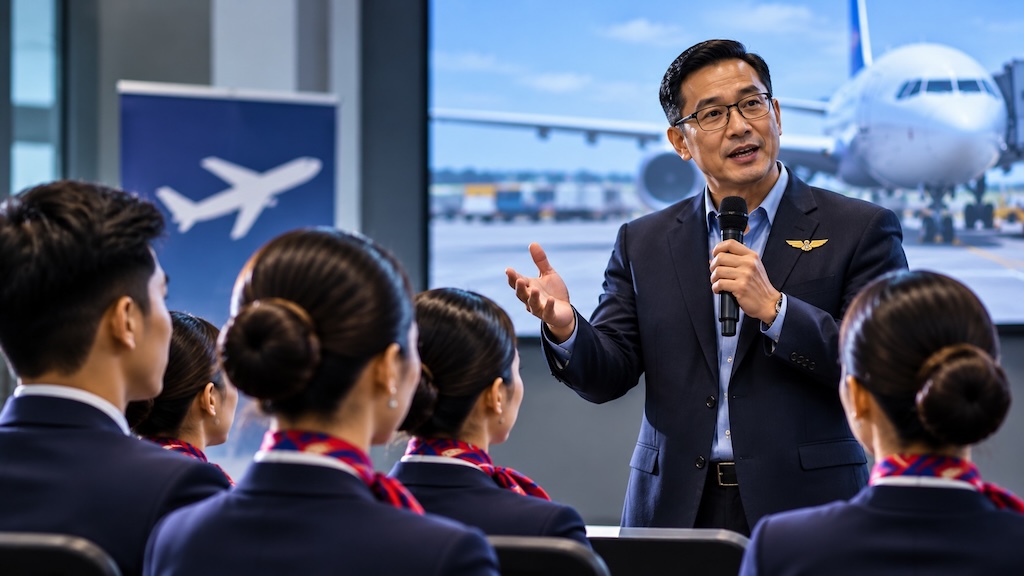
The aviation industry operates on foundational pillars of rigorous discipline, technical competence, extensive practical experience, and an uncompromising dedication to safety. Long before aspiring aviation professionals step into a flight deck, service an airframe, manage ground operations, serve passengers as cabin crew, or assume leadership responsibilities across the sector, they must develop a deep appreciation for these essential standards. For those aspiring to become flight attendants, this includes understanding that their responsibilities extend far beyond passenger service and hospitality to encompass cabin safety, emergency preparedness, and the well-being of everyone on board. However, the rapid expansion of digital platforms and online aviation content has increasingly blurred the distinction between genuine professional expertise and mere social media popularity.
This development raises a critical question for academic institutions: Are schools offering aviation-related programs, including flight attendant training, conducting sufficient due diligence to verify the credentials, professional backgrounds, and actual expertise of the individuals they invite as resource speakers for career talks, seminars, and other educational activities?
Career orientations, technical seminars, and professional symposiums serve as vital cornerstones within aviation curricula. These forums bridge academic theory and real-world execution by introducing students to operational realities, emerging technological trends, industry challenges, and practical wisdom rarely found in standard textbooks. Despite their immense value, the actual educational merit of these engagements rests entirely upon the legitimate expertise and credibility of the individuals addressing the lecture halls.
A clear distinction must be drawn between personal passion and genuine technical qualification. Aviation enthusiasts, planespotters, content creators, and photographers provide significant contributions by raising public interest and fostering enthusiasm for the aerospace domain. Many have cultivated impressive knowledge bases through sustained study, field observations, and interactions with industry figures, with some establishing themselves as capable commentators and writers. Even so, enthusiasm alone does not equal professional qualifications. Amassing thousands of followers, publishing aircraft imagery, distributing flight videos, or offering public commentary on airline operations cannot substitute for the extensive background required to lecture on complex maintenance procedures, flight operations, strict regulatory compliance, or aviation safety management. Access to senior executives, attendance at industry functions, or casual photo opportunities inside cockpits should never be equated with legitimate operational credentials. Visibility is fundamentally distinct from credibility, and online prominence cannot be regarded as a substitute for verified competence.
Educational institutions bear a direct responsibility to thoroughly vet the qualifications of any individual invited to educate their students. Prior to extending speaking engagements, academic departments must evaluate a prospective presenter’s educational background, direct industry experience, technical certifications, professional affiliations, and demonstrable subject matter expertise. When an agenda focuses on aircraft maintenance and engineering, an appropriately licensed and experienced maintenance professional should be selected to explain intricate mechanical tasks, airworthiness directives, and regulatory obligations. Similarly, sessions addressing flight operations demand seasoned commercial pilots, certified flight instructors, or operational specialists who can share insights rooted in firsthand operational experience. For students aspiring to become flight attendants or cabin crew members, schools should prioritize experienced cabin crew professionals, qualified cabin crew instructors, pursers, or cabin services managers who can provide authoritative guidance on passenger safety, emergency procedures, crew resource management, inflight service standards, and the realities of working aboard commercial aircraft. After all, the responsibilities of flight attendants extend well beyond serving meals and attending to passenger comfort; they are trained safety professionals entrusted with protecting lives during normal operations and emergencies. When topics shift toward aviation policy, air transport economics, or airport management, credible analysts, regulators, corporate executives, and specialized journalists may provide meaningful insights, provided their backgrounds align directly with the subject being discussed. While not every speaker requires an airline transport pilot license, an aeronautical engineering degree, or years of cabin crew experience, their expertise must be demonstrable, verifiable, and directly relevant to the specific subject matter being presented.
Treating inaccurate information casually in aviation training introduces significant risks. Flawed explanations regarding aircraft systems, procedural protocols, safety mandates, or certification standards can instill lasting misconceptions in students who lack the technical foundation to dispute what they are being taught. Because these presentations carry the formal endorsement of the academic institution, students naturally assume the presenter’s remarks have been thoroughly vetted and validated. This institutional backing carries immense weight, especially when discussing career progression, licensing expenses, training commitments, and employment realities. Presenting inaccurate guidance can derail a student’s career planning and result in severe educational and financial missteps. Guest speaker invitations must therefore be treated as consequential educational choices rather than mere public relations exercises or routine event programming.
While digital platforms have effectively democratized access to aviation topics, a high follower count, polished video production, and a confident delivery style do not guarantee technical precision. Legitimate speakers understand the boundaries of their knowledge and readily admit operational limits, which is a vital safety mindset across all aerospace disciplines. Emphasizing thorough vetting is not about gatekeeping; diverse voices remain welcome in academic spaces when properly framed. Content creators can discuss digital media strategy and audience engagement, planespotters can speak on ramp ethics and photography techniques, and frequent travelers can share passenger experience insights. The priority is ensuring that individuals are introduced accurately according to their real-world competencies rather than being assigned exaggerated credentials.
AvGeek Philippines urges colleges, universities, and technical training institutions to elevate their screening standards for all guest lecturers. Institutions should systematically verify credentials, review professional track records, examine past work, and ensure that every speaker’s background corresponds directly to the curriculum. Students must also be guided to cultivate critical thinking, verify information independently, and recognize the clear difference between professional experience, informed commentary, and personal opinion. Because aviation demands the highest levels of safety and accountability, credibility in aviation education must never be treated as an optional standard.