
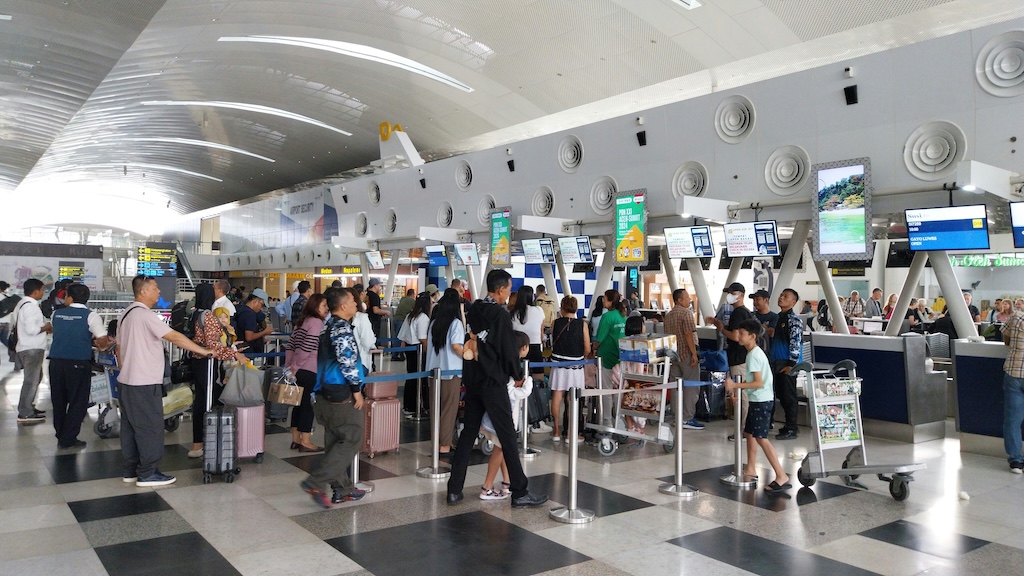
For many travelers, few airport scenarios trigger more anxiety than arriving at the gate only to hear an announcement that a flight is completely full and some confirmed passengers cannot board. Flight overbooking is a polarizing topic in aviation. While passengers often view it as a frustrating exercise in corporate greed, airlines defend it as a vital tool for economic efficiency. As conversations about passenger rights frequently trend on social media, misinformation easily spreads. A viral post might sound official, but it can muddy the waters of what the law actually allows. Understanding the reality of overbooking requires a look at local airlines in the Philippines relative to global trends, as well as what the current rules actually dictate.
Fact-Checking Social Media: The Myth of the 10% Overbooking Cap
When flights get delayed or passengers get bumped, social media often fills with well-meaning but legally outdated legal advice. Someone claimed online that airlines are legally blocked from selling more than 10% over their capacity, asserting that overbooking must not exceed 10% of the aircraft’s total seat capacity. While this sounds like a great consumer protection rule, this cap no longer exists in the Philippines.
Under older, legacy aviation rules, there was indeed a strict regulatory limit that prevented local airlines from overbooking by more than 10%. However, as documented by local outlets like GMA Network, the Civil Aeronautics Board (CAB) said that this cap was removed when the Air Passenger Bill of Rights (APBR) was introduced. The government decided a strict percentage cap was no longer needed because the law switched from a preventative limit to harsh financial consequences. By introducing much stricter financial penalties and compensation mandates for bumping passengers, airlines were naturally deterred from abusing the system. While recent legislative pushes and passenger complaints have prompted lawmakers to debate bringing a cap back, no such statutory 10% limit is active in 2026.
The Global Baseline: A Math Game, Not a Free-for-All
Even without a rigid 10% cap, airlines are not overbooking flights with outrageous numbers. Globally, overbooking is a highly precise math game regulated by predictive algorithms. Major network carriers in the United States, Europe, and the Middle East use historical data to guess exactly how many no-show passengers a flight will have based on the day of the week, weather patterns, and historical traffic.
Airlines do not randomly sell dozens of extra tickets for a small plane. In reality, global overbooking margins typically range between a conservative 1% and 5% of the plane’s actual capacity. This strategy is usually focused on routes heavily frequented by corporate travelers holding highly flexible, easily rebookable tickets who are statistically prone to changing plans at the last minute.
The Philippine System: Heavy Financial Penalties
Instead of relying on an outdated 10% cap to control oversales, the Philippine APBR relies on financial weight. If a Philippine carrier involuntarily bumps a passenger due to overbooking, the mandatory compensation is costly enough to keep airlines structurally honest. The airline must pay whichever is higher between the full value of the affected flight sector, including surcharges and taxes, or a flat statutory fee of PHP5,000 for domestic flights and PHP10,000 for international flights. On top of this cash penalty, the airline must provide free meals, refreshments, communications access, and immediate rebooking or endorsement to a competitor airline. If an overnight stay is required, hotel accommodations and round-trip airport transfers must also be paid for entirely by the carrier.
Full-Service vs. Low-Cost Carriers in Local Skies
The execution of overbooking varies drastically between local business models. As a full-service carrier normally utilizes traditional overbooking models because a significant portion of its inventory consists of flexible business and premium economy tickets, where corporate travelers frequently miss flights. Conversely, budget airlines rarely practice deliberate overbooking. Their business relies on non-refundable, heavily penalized promo tickets like Piso Fares. If a budget traveler is a no-show, the airline keeps the money anyway, eliminating the financial risk of an empty seat. When passengers are bumped from budget flights in the Philippines, it is almost always the result of an operational downgrade, such as a last-minute aircraft swap to a smaller plane due to technical maintenance, rather than an intentional oversales strategy.
The Strictly Enforced “Save List”
If a flight in the Philippines does end up overbooked and the airline cannot secure enough volunteers through an auction system, they cannot pick passengers to bump arbitrarily. The APBR mandates a strict Boarding Priority List that shields vulnerable travelers. Ground crews are legally required to prioritize boarding first for unaccompanied minors, followed closely by senior citizens, Persons with Disabilities, and their companions. Pregnant women and those traveling with children under 4 years old also receive high priority, alongside passengers with scheduled, non-elective medical procedures. Finally, travelers previously denied boarding on the same ticket and connecting passengers with outward flights are protected before the general passenger manifest is considered. Ultimately, while overbooking remains an active mechanism in the Philippine aviation landscape, strict financial consumer protections ensure that local skies remain far from a chaotic free-for-all, even if social media occasionally gets the legal details wrong.
Photo by Edwin Petrus on Unsplash