
If you spend as much time tracking flights or looking out of window seats as I do, you know that commercial aviation is a marvel of modern engineering. However, the sky can be highly unpredictable.
We’ve all seen it: you’re standing in the aisle, waiting your turn for the restroom, when that familiar ding echoes through the cabin and the overhead sign illuminates.
Many passengers make the mistake of thinking, “I’m already next in line, I’ll just wait.” But as an aviation geek, let me tell you why ignoring that sign — even for a minute — is a massive safety risk.
The Danger of the Lavatory Queue
When the captain turns on the fasten seatbelt sign, it is rarely a gentle suggestion. Pilots have access to real-time weather radar, reports from other aircraft ahead of them, and meteorological data indicating rough air.
If you are standing in the aisle or a galley queue, you are completely unprotected. In severe turbulence, an aircraft can drop hundreds of feet in a matter of seconds. Without a seatbelt, your body continues moving at the airplane’s original altitude, effectively launching you toward the ceiling. You risk sustaining severe concussions, broken bones, or injuring fellow seated passengers when you come crashing back down.
What to Do if You are Already Inside the Lavatory
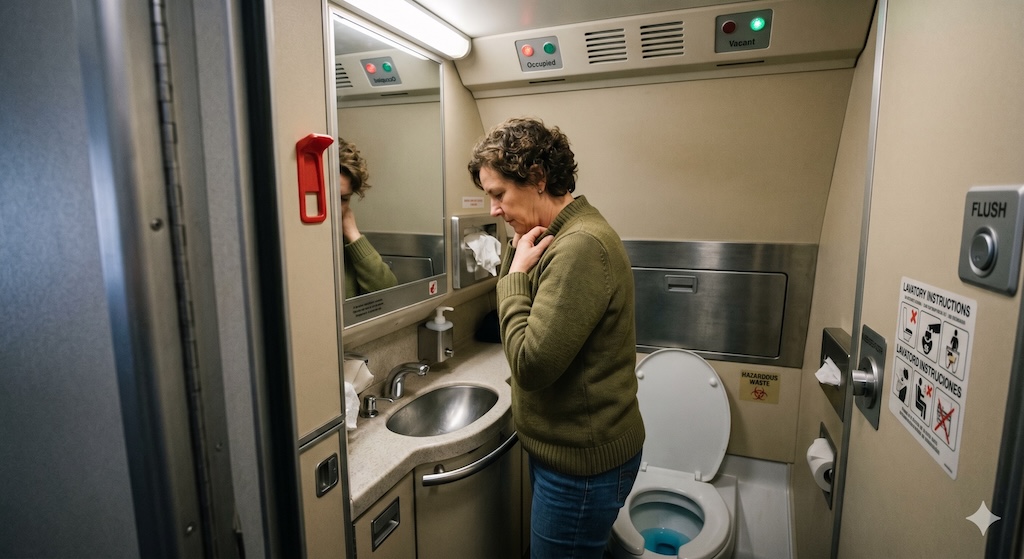
But what happens if you’ve already secured the door and are mid-business when the sign turns on? Don’t panic, but act immediately. Do not try to rush out into a shaking cabin. Instead, the first thing you need to do is locate the grab bars. Aircraft lavatories are legally required to feature heavy-duty, securely mounted handles, and grabbing onto them immediately will help steady yourself against sudden movements.
Next, make sure to sit down right away. If you are using the toilet, remain seated, as lowering your center of gravity drastically reduces the risk of being thrown against the walls. If you are standing, try to lower yourself safely to a stable position.
Finally, you must secure the space and stay put. Do not try to open the door or rush back to your cabin seat until the turbulence passes or a flight attendant explicitly instructs you to exit. The restroom is a confined, tight space with sharp corners, meaning that staying braced inside is far safer than attempting to walk down an unstable, moving aisle.
Why Constant Compliance Saves Lives
Compliance with the seatbelt sign isn’t just about avoiding a bumpy ride; it’s about the phenomena known as Clear Air Turbulence (CAT). Unlike storm clouds, CAT cannot be seen visually and often completely evades traditional cockpit radar.
When an aircraft hits CAT, there is zero warning. The plane can experience instantaneous, violent vertical accelerations. Aviation safety statistics consistently show that the vast majority of in-flight injuries occur to passengers who left their seatbelts unfastened while the sign was illuminated, alongside cabin crew who were securing the service carts.
When that “ding” sounds, the crew is prioritizing your life. Even if the air feels perfectly smooth right now, return to your row, slide into your seat, and buckle up low and tight. Safe travels, and keep your eyes on the skies!