
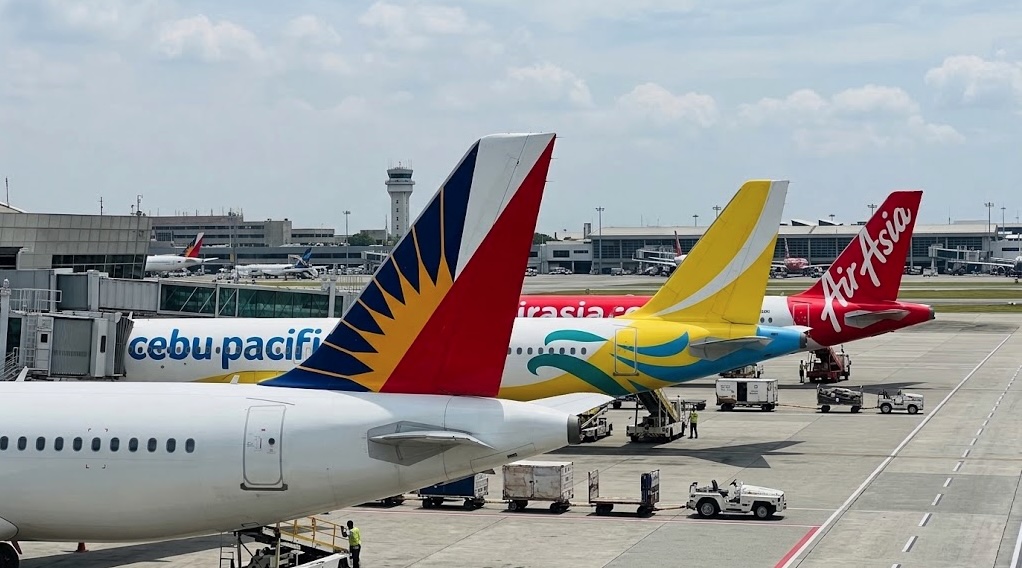
Walk into any major airport in the Philippines, and the impression is unmistakable: the airline industry appears to be thriving. Check-in counters are busy, departure lounges are crowded, and flights to popular domestic and international destinations are frequently packed with passengers.
Airlines regularly announce increases in passenger traffic, new aircraft deliveries, additional routes, and expanded flight frequencies. For the traveling public, these developments naturally create the impression that Philippine airlines are enjoying a period of strong financial performance.
But there is a significant difference between an airline carrying more passengers and an airline actually making money.
A full aircraft does not necessarily mean a profitable flight. And record passenger traffic does not automatically translate into record earnings.
This is the financial reality facing the Philippine airline industry as it navigates rising operating expenses, volatile aviation fuel prices, foreign exchange pressures, and intense competition for passengers.
The Illusion of a Booming Industry
Passenger traffic is perhaps the most visible indicator of aviation activity. When airports are crowded and airlines report millions of passengers carried, it is easy to conclude that business must be good.
However, passenger numbers tell only part of the story.
An airline’s financial performance depends not simply on how many people board its aircraft, but on how much revenue those passengers generate compared with the cost of transporting them.
For example, an aircraft with 180 seats may depart with every seat occupied. Yet if the airline has sold most of those seats at heavily discounted fares, the total revenue may still be insufficient to cover fuel, aircraft ownership or leasing costs, maintenance, crew salaries, airport charges, and other operating expenses.
This is why airlines closely monitor not only passenger volumes and seat occupancy, but also passenger yields, revenue per available seat kilometer, and operating costs.
Simply put, carrying more passengers is good for business only when the additional revenue is sufficient to cover the additional costs.
The Fuel Cost Problem
Among the most significant financial challenges facing Philippine airlines is the cost of aviation fuel.
Jet fuel represents a substantial portion of an airline’s operating expenses. Even relatively small changes in fuel prices can have major financial consequences, particularly for carriers operating hundreds of flights daily.
The situation becomes more complicated for airlines in the Philippines because aviation fuel and many other aviation-related expenses are priced in US dollars.
When international fuel prices increase, airlines pay more to operate their flights. When the Philippine peso weakens against the US dollar, those expenses become even more costly in peso terms.
Fuel is not the only dollar-denominated expense. Aircraft leases, spare parts, maintenance services, and certain financing obligations also expose airlines to foreign exchange fluctuations.
Consequently, an airline may carry more passengers and generate higher revenue in pesos, yet still experience declining profitability because its operating expenses are increasing at a faster rate.
Why Airlines Cannot Simply Increase Ticket Prices
A common question is why airlines do not simply increase fares whenever fuel prices rise.
In theory, they can. In practice, the situation is considerably more complicated.
The Philippine airline market is highly competitive and price-sensitive. Many travelers choose flights based primarily on ticket prices, particularly on domestic routes where several airlines may compete for the same passengers.
An airline that significantly increases its fares risks losing customers to competitors offering cheaper alternatives.
There is also the Civil Aeronautics Board’s fuel surcharge mechanism.
The CAB determines the maximum fuel surcharge that airlines may collect from passengers, based on prevailing aviation fuel prices. This mechanism allows airlines to recover part of their fuel expenses through a separate charge.
However, the fuel surcharge is not a guarantee that airlines will recover their actual fuel costs.
It is also important to clarify that the CAB fuel surcharge ceiling does not generally prevent airlines from increasing their base fares. Airlines retain considerable flexibility in setting ticket prices.
The real limitation is often commercial rather than regulatory: passengers may simply be unwilling or unable to pay significantly higher fares.
This creates a difficult balancing act. Airlines must generate enough revenue to sustain operations while keeping ticket prices competitive and affordable.
More Passengers, But Are Airlines Profitable?
The financial performance of Philippine carriers in 2026 demonstrates why passenger growth should not be confused with profitability.
According to CAB figures, Philippine airports handled 32.65 million passengers in the first half of 2026, a modest one-percent increase from the same period in 2025. Domestic passenger traffic remained relatively flat at 17.38 million, while international traffic grew by nearly three percent.
Yet the country’s two largest airline groups reported substantial financial losses during the same period.
Cebu Pacific’s parent company, Cebu Air Inc., reported a net loss of approximately PHP 5.9 billion in the first six months of 2026, compared with a net profit of PHP 8.97 billion a year earlier.
This happened despite the airline carrying nearly 14.5 million passengers, four percent more than the previous year, and generating PHP 68.6 billion in revenue, an 8% increase.
Cebu Pacific still recorded a modest operating profit of approximately PHP 300 million for the first half, but higher fuel expenses, financing costs, and foreign exchange losses contributed to its substantial bottom-line loss.
Philippine Airlines faced similar pressures. Its parent company, PAL Holdings Inc., reported a net loss of approximately PHP 1.84 billion in the first half of 2026, reversing a profit of PHP 7.66 billion in the corresponding period last year.
PAL’s fuel expenses increased sharply, with the airline reporting a 48.2% rise in fuel costs in US-dollar terms. Fuel accounted for 39.2% of its operating expenses, compared with 30.3% a year earlier.
PAL’s passenger traffic declined by 3.1% to 8.2 million, although its revenue increased as the airline adjusted fares and benefited from stronger passenger yields and cargo revenues.
AirAsia Philippines faced the same squeeze. Despite steady passenger demand and high load factors, surging jet fuel costs, a weakening peso, and fleet constraints heavily eroded operating margins, underscoring that filling seats was not enough to counter 2026’s steep operational expenses.
These figures illustrate an important point: an airline can increase revenue, maintain substantial passenger traffic, and still report a financial loss.
They also show that the situation is not identical across every airline or route. PAL, for example, indicated that its domestic operations remained profitable despite the group’s overall financial losses.
Why Are Airlines Still Buying Aircraft and Expanding?
Another factor contributing to the perception of a financially healthy airline industry is the continued announcement of new aircraft orders, fleet expansion programs, and additional destinations.
If airlines are losing money, why are they still investing in new aircraft?
The answer is that aviation investments are typically planned years in advance.
Aircraft orders involve long delivery schedules, financing arrangements, and long-term network strategies. An airline ordering new aircraft today is generally preparing for its expected requirements several years into the future, not simply responding to its current financial performance.
New-generation aircraft can also help airlines reduce fuel consumption per seat, improve operational efficiency, and replace older aircraft that are becoming increasingly expensive to maintain.
Consequently, aircraft deliveries and route expansion should not automatically be interpreted as evidence of substantial current profits.
An airline may be experiencing financial difficulties in the short term while continuing to invest in what it believes will be a more profitable operation in the future.
The Passenger’s Perspective Still Matters
None of this means passengers should simply accept higher ticket prices, additional charges, or poor service because airlines are facing financial difficulties.
Passengers are entitled to transparent pricing, reliable operations, and the services they have paid for.
Airlines, meanwhile, have a responsibility to manage their costs efficiently, maintain operational reliability, and ensure that fare increases are commercially justified.
The public should also recognize that a fuel surcharge is not necessarily an additional profit for the airline. Its purpose is to help recover higher fuel expenses, although the actual amount recovered depends on the applicable CAB ceiling, the airline’s pricing decisions, and the number of passengers carried.
For 01 to 15 November 2026, the CAB has approved Level 17 fuel surcharges, with domestic passenger charges ranging from PHP 559 to PHP 1,635, depending on flight distance. The higher level reflects continued pressure from aviation fuel prices.
These charges are subject to regulatory approval and do not automatically compensate airlines for every increase in fuel expenses.
A Growing Industry Is Not Necessarily a Profitable One
There is no question that aviation remains essential to the Philippines.
As an archipelago, the country depends heavily on air transport for tourism, commerce, family travel, employment, and connectivity between islands and international destinations.
Strong demand for air travel is encouraging. Crowded airports and busy flights demonstrate the importance of aviation to the Philippine economy.
However, a distinction must be made between a growing aviation market and financially healthy airlines.
The first measures the demand for air travel. The second measures whether airlines can sustain their operations, meet financial obligations, invest in their fleets, and generate sufficient returns.
The financial difficulties reported by major Philippine carriers in 2026 do not necessarily mean the industry is collapsing. Neither do strong passenger numbers mean every airline is prospering.
The more accurate picture is an industry experiencing sustained demand while facing considerable pressure on profitability.
For the traveling public, the lesson is straightforward.
The next time you board a fully occupied aircraft or see a crowded airport terminal, remember that every passenger represents revenue — but every flight also carries substantial costs.
The real measure of an airline’s financial health is not simply how many passengers it carries, how many aircraft it operates, or how many destinations it serves.
It is whether the airline earns enough from those operations to remain financially sustainable.
Full flights may be good news for passenger demand. They are not, by themselves, proof of healthy airline profits.