
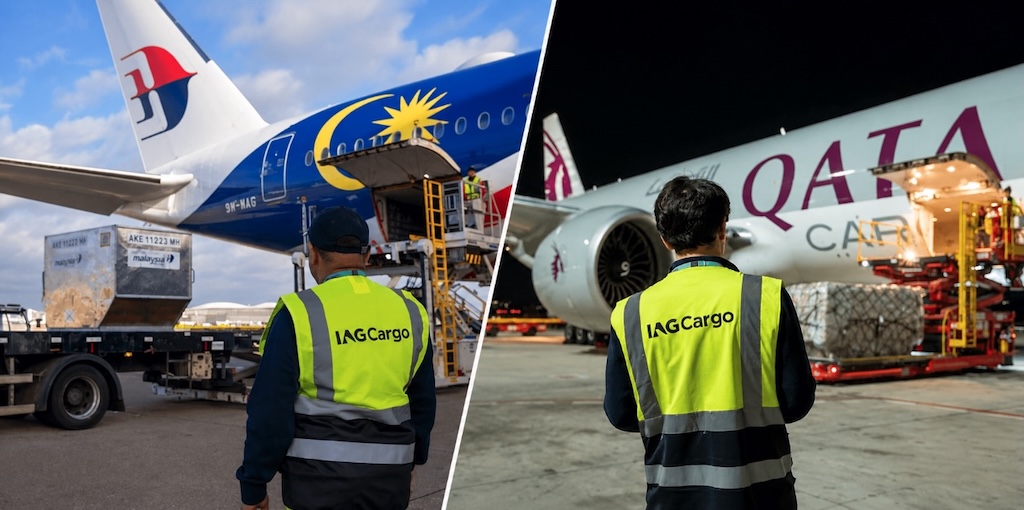
In a significant milestone for international air freight, MAB Kargo Sdn Bhd (MASkargo), IAG Cargo, and Qatar Airways Cargo have successfully completed the trial of their first customer shipment transported across all three carriers. This successful test run comes ahead of the official full launch of their Global Cargo Joint Business scheduled for later this year. The initial shipment offers an early demonstration of how global customers stand to benefit from the combined strengths of the three airlines, allowing cargo to move seamlessly across multiple air carriers, key operational hubs, and regions through a single coordinated global network.
The historic first trilateral shipment involved the transportation of 11 tonnes of copper foil routed from Kuala Lumpur (KUL) to Chicago O’Hare (ORD) with stopovers in Doha (DOH) and Dublin (DUB). As an essential component for advanced electronics and electric vehicle battery production, copper foil plays a critical role in supporting global digital and energy transition initiatives. Originating from Malaysia, which serves as a major electronics manufacturing hub, the movement highlights the future value of the Global Cargo Joint Business in directly connecting primary production centers with widespread global demand markets through an intensely integrated network.
According to Mark Jason Thomas, Chief Executive Officer at MASkargo, “This milestone brings the ambition behind our partnership into focus: connecting businesses to greater opportunities through the collective strengths of three leading cargo carriers. For MASkargo, seeing this first shipment move from Malaysia across our partners’ networks demonstrates the potential of this collaboration to strengthen the link between Asia’s production centres and global demand. As we progress towards launch, our shared focus is on translating that potential into wider market access, greater flexibility and enduring value for our customers.”
First announced in 2025, the Global Cargo Joint Business unites three prominent cargo operators to build a commercial air freight network of unprecedented reach and scale. Once the joint partnership is fully operational, clients will gain streamlined access to more than 400 destinations spanning six continents under one highly connected air network. Shippers will gain significant advantages including increased operational flexibility, expanded flight routing choices, and faster, more seamless market access worldwide.
David Shepherd, Chief Executive Officer at IAG Cargo, said, “Completing our first trilateral customer shipment is a significant milestone as we continue preparations for the launch of the Global Cargo Joint Business, which will redefine international air cargo. Alongside our partners, we have been aligning our operations, systems and expertise to create a Joint Business that works seamlessly across our combined networks. As we progress towards full launch, our focus remains on delivering a coordinated proposition that provides tangible benefits for customers across the global air freight market.”
On the other hand, Mark Drusch, Chief Officer Cargo at Qatar Airways Cargo, said, “The successful transport of this tripartite shipment showcased the operational alignment, connectivity and customer-focused approach that will underpin the Joint Business. For our customers, this is about creating a simpler, more connected experience and demonstrates the strength of our collaboration. By combining our complementary networks and expertise, we are building a truly global cargo offering that delivers greater reach, more routing flexibility and enhanced efficiency.”
Strategic ground handling integrations have paved the way for these trial operations. Earlier this year, IAG Cargo was officially appointed as the ground handling agent for Qatar Airways Cargo in both Dublin and Madrid, two key strategic hubs within the alliance. These operational adjustments follow the prior introduction of MASkargo handling operations at London Heathrow last year, building the foundational alignment necessary to support a cohesive joint business structure. Moving forward, the three partner carriers will continue conducting operational trials and system integrations ahead of the formal rollout later this year, while customers can already reserve shipments using any of the three airlines’ online booking portals.